What Is Bitget rToken? A New Way to Access U.S. Stocks with USDT
U.S. stocks have always felt like a different world from crypto. Crypto trades around the clock, moves through stablecoins, and lives inside exchange accounts, while stocks are usually tied to brokers, bank transfers, USD balances, and market hours. Yet the demand is clearly there. Many crypto users follow names like NVIDIA, Apple, Tesla, and Microsoft every day, but accessing them through traditional stock channels can still feel slow, separate, and less flexible than the crypto products they already use.
Bitget rToken is designed to bring these two worlds closer. Launched as part of Bitget Stocks 2.0 on June 2, 2026, Bitget rToken gives eligible users a new way to access selected U.S. stock and ETF exposure with USDT inside Bitget’s crypto-native trading ecosystem. Instead of treating stock exposure as something locked inside a separate brokerage account, rToken allows supported assets to be traded, transferred, used as margin, and connected with crypto strategies. In this article, we will learn what Bitget rToken is, how it works, how it differs from other tokenized stocks, and what users should know before trading it.
What Is Bitget rToken?
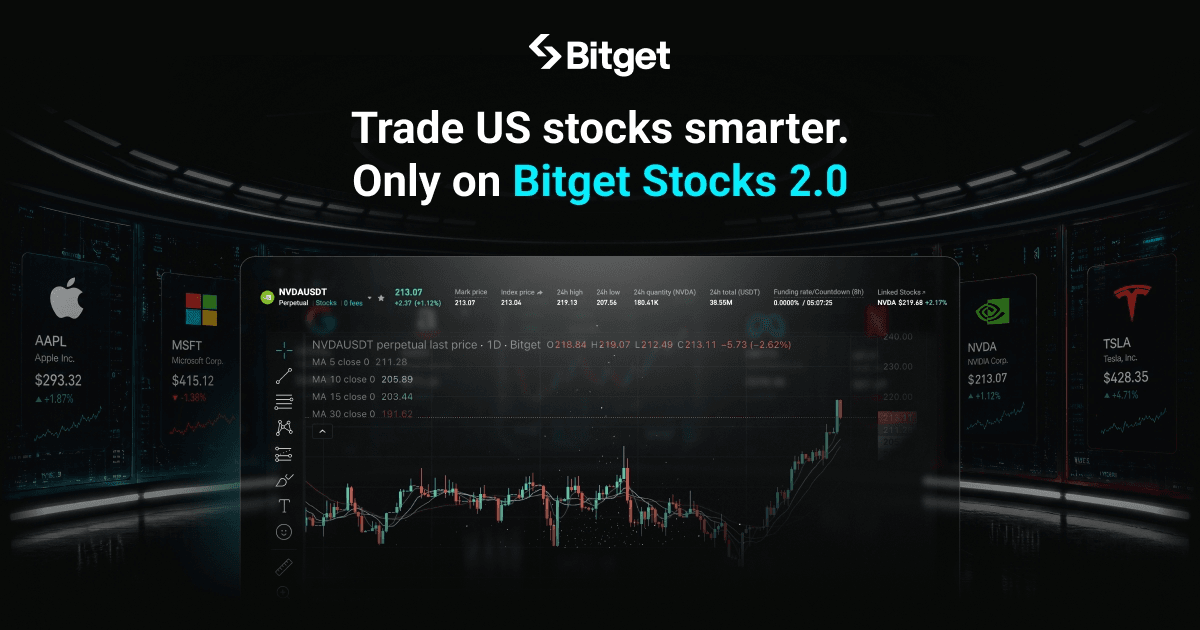
Bitget rToken, also known as Bitget Stock Token, is a tokenized U.S. stock and ETF product issued by Reality, a regulated real-world asset (RWA) issuance platform backed by Bitget. It is designed for crypto-native users who want exposure to traditional financial assets while keeping their capital inside a digital-asset trading environment.
Instead of opening a traditional brokerage account and first funding it with USD, eligible users can trade supported stock-linked assets against USDT on Bitget.
The naming system is simple. Each asset normally uses r + the underlying ticker:
-
rNVDA: NVIDIA Tokenized Stock (Reality)
-
rAAPL: Apple Tokenized Stock (Reality)
-
rTSLA: Tesla Tokenized Stock (Reality)
-
rMSFT: Microsoft Tokenized Stock (Reality)
-
rSPY: SPDR S&P 500 ETF Tokenized Stock (Reality)
-
rQQQ: Invesco QQQ ETF Tokenized Stock (Reality)
Each rToken is designed to track the economic value of its corresponding underlying stock or ETF. However, holding an rToken is not the same as directly owning a registered U.S. share through a traditional broker. rToken holders generally do not appear on the shareholder register or receive shareholder voting rights.
What makes rToken increasingly interesting is what users can do after buying it. Depending on the asset and account type, supported rTokens can be traded with USDT, used as margin, pledged as collateral, used for borrowing, added to automated portfolios, connected with structured products, or held and traded on-chain.
How Bitget rToken Works
Bitget rToken connects real-world securities with Bitget's crypto trading infrastructure. Instead of treating U.S. stocks as assets that only belong inside a brokerage account, rToken turns their economic exposure into a tokenized format that can interact with a broader digital-asset ecosystem.
The structure has three main layers:
-
Reality provides the issuance infrastructure. Reality issues the rTokens and connects them with the corresponding underlying securities.
-
Real stocks and ETFs provide the underlying exposure. Each rToken is designed to maintain 1:1 backing with its corresponding underlying asset.
-
Bitget provides the trading and utility layer. Eligible users can trade supported rTokens with USDT and use them across supported Bitget products and strategies.
Reality's underlying stocks and ETFs are custodied through Alpaca Securities LLC, a FINRA-registered broker-dealer and SIPC member. In August 2026, Reality also expanded its transparency framework with independently prepared daily Proof of Reserves attestation reports from The Network Firm. These reports are designed to verify that issued rTokens remain matched with their corresponding underlying securities held in custody.
👉To view the latest Proof of Reserves attestation, visit HERE.
This backing structure is important because rToken is not simply a synthetic ticker created to follow a stock price. It connects tokenized issuance, regulated custody, reserve verification, market liquidity, and Bitget's trading infrastructure.
What Makes Bitget rToken Different From Other Tokenized Stocks?
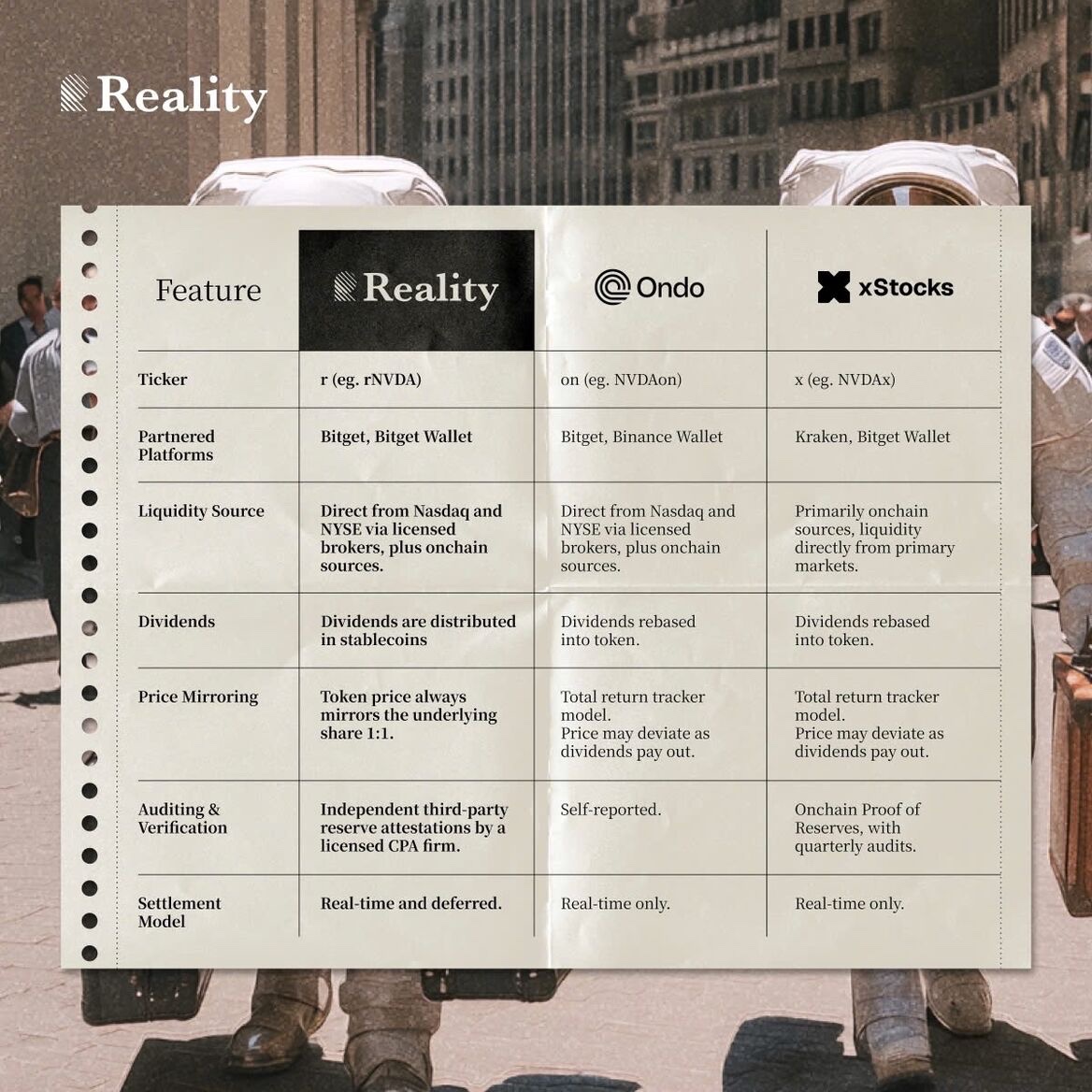
Bitget rToken vs. Other tokenized stocks
Not all tokenized stocks are built in the same way. Some products mainly provide price exposure and stop at basic buying and selling. Bitget rToken has gradually developed into a wider ecosystem where stock-linked assets can play several roles at once.
The difference is no longer only that users can buy U.S. stock exposure with USDT. Eligible rTokens can also remain in a portfolio while being used as margin or collateral, support borrowing, participate in automated strategies, and move between centralized and on-chain environments.
| Feature |
Typical Tokenized Stock Product |
Bitget rToken |
| Trading pair |
Varies by platform |
USDT for supported pairs |
| Trading access |
Depends on issuer/platform |
Extended sessions, with selected rTokens available 24/7 |
| Backing |
Depends on issuer |
Designed for 1:1 backing by corresponding underlying assets |
| Reserve verification |
Varies |
Daily independent PoR attestations through The Network Firm |
| Cash dividends |
Varies |
Eligible net dividends distributed in USDT |
| Corporate actions |
Depends on product structure |
Supported splits, stock dividends and other actions reflected automatically |
| Margin utility |
Often limited |
Eligible rTokens can serve as margin in Bitget UTA |
| Borrowing |
Varies |
120+ rTokens supported as Crypto Loans collateral |
| Margin trading |
Varies |
Supported rToken pairs offer margin trading with up to 10x leverage |
| Automated investing |
Varies |
Auto-Invest, Smart Portfolio and Trend-Following Bot support |
| On-chain access |
Depends on platform |
Supported on Arbitrum and Morph |
| API access |
Varies |
Reality Stock Spot API available |
The result is a product designed not only for accessing U.S. markets, but also for making stock-linked exposure work more efficiently alongside crypto capital.
Key Benefits of Bitget rToken
Bitget rToken started as a simpler way to access tokenized U.S. stocks with USDT. Since June 2026, its use cases have expanded quickly. Users can now move from simply buying and holding stock-linked assets to using supported rTokens across trading, borrowing, portfolio management and on-chain strategies.
1. Access U.S. Stock Exposure With USDT
Many crypto users already use USDT as their main trading balance. Bitget rToken allows eligible users to access supported U.S. stocks and ETFs directly through USDT trading pairs.
This reduces the need to move capital into a separate brokerage environment, maintain a separate USD balance, or repeatedly move funds between crypto and traditional financial accounts.
2. Access Hundreds of U.S. Stocks and ETFs
Reality supports a broad and continuously expanding range of tokenized U.S. stocks and ETFs, covering major technology companies, semiconductor stocks, consumer brands, financial companies and index ETFs.
Popular examples include NVIDIA, Tesla, Apple, Microsoft, Amazon, Meta, SPY and QQQ.
Because the number of supported assets continues to change, users should check the live Bitget Spot Stocks market before trading. Reality's current reserve framework covers more than 500 tokenized stocks and exchange-traded products.
3. 1:1 Backing With Daily Independent Reserve Attestations
Each rToken is designed to remain backed 1:1 by the corresponding underlying security.
The underlying securities are held through regulated custody infrastructure, while Reality works with The Network Firm to publish independently prepared daily Proof of Reserves attestation reports. This gives users more frequent visibility into the assets supporting issued rTokens instead of relying only on occasional reserve reporting.
This is separate from Bitget's broader exchange Proof of Reserves system. Reality's rToken reserve framework specifically focuses on matching issued tokenized assets with the corresponding securities held in custody.
4. 24/7 Trading for Selected rTokens
Traditional U.S. stocks still revolve around market sessions. Bitget rToken expands that window.
On U.S. trading days, rToken trading can connect with underlying market liquidity through market infrastructure. Outside traditional market hours, selected rTokens can continue trading through Bitget-supported liquidity.
By August 14, 2026, Bitget had expanded 24/7 trading to 93 rTokens, including assets linked to Apple, NVIDIA, Tesla, Amazon, Meta, AMD, SPY, QQQ and other popular names. Availability can continue to expand, so users should check the current trading page for each asset.
This makes it possible for eligible traders to react to market developments even when traditional U.S. exchanges are closed.
5. Eligible Dividends Paid Automatically in USDT
Owning tokenized stock exposure does not necessarily mean giving up dividends.
When a supported underlying stock or ETF pays an eligible cash dividend, Bitget automatically processes the distribution and credits the eligible net amount to the user's account in USDT.
Recent rToken cash-dividend distributions have applied a 30% U.S. federal withholding tax through the securities custodian, with the remaining net amount distributed to eligible holders. Tax treatment can vary depending on the security, product rules and applicable regulations.
Supported stock dividends may instead be reflected through additional rTokens.
6. Automatic Corporate Action Handling
Stocks do more than move up and down. They split, reverse split, distribute shares, merge and undergo other corporate actions.
For supported events, Bitget adjusts eligible rToken positions according to the corresponding corporate-action rules. Stock splits and reverse splits, for example, can result in changes to token quantity and unit value while preserving the holder's economic exposure.
This reduces the amount of manual work users would otherwise need to perform when managing stock-linked positions.
7. Use 150+ rTokens in Cross-Asset UTA
One of the biggest upgrades to rToken came with Bitget's Cross-Asset Unified Trading Account (UTA).
Bitget now brings more than 150 eligible rTokens into a unified margin pool. Instead of selling an rToken to free up capital, eligible users can keep their stock-linked exposure while using the asset as margin for other supported trading activities.
This gives an eligible rToken three potential roles at the same time:
-
Hold it: Maintain exposure to the underlying U.S. stock and potential eligible dividends.
-
Use it as margin: Support futures or margin trading without first selling the position.
-
Borrow against it: Use eligible holdings to access stablecoin liquidity.
This is where rToken becomes more than a stock-trading product. A stock-linked asset that would normally sit passively in a portfolio can become part of a wider capital-management strategy.
Learn more: What Is Bitget Unified Trading Account (UTA)? Trade More Efficiently With One Account
8. Trade rTokens With Margin and Up to 10x Leverage
Bitget margin trading now officially supports selected spot rTokens.
Eligible users can provide collateral, enable automatic borrowing and use borrowed funds to increase their exposure to supported rToken pairs such as rNVDA/USDT. Bitget currently supports up to 10x leverage on eligible rToken margin pairs.
The system can automatically handle borrowing when an eligible margin order is placed, reducing the need to borrow funds manually before trading.
Leverage can magnify both gains and losses, so margin trading carries substantially higher risk than simply buying an rToken with available funds.
9. Borrow Against rTokens With Crypto Loans
Users who need liquidity do not necessarily have to sell their stock-linked positions.
Bitget Crypto Loans now supports more than 120 rTokens as collateral, including assets such as rNVDA and rTSLA. Eligible users can pledge supported rTokens and borrow from more than 100 crypto assets, including USDT and USDC.
This allows users to maintain exposure to an eligible rToken while accessing capital for other purposes.
Flexible-term loans do not have a fixed maturity date and can be repaid according to the applicable loan rules. Users should still monitor collateral values and loan-to-value requirements because falling rToken prices can increase loan risk.
10. Automate rToken Investing and Portfolio Management
rToken is also integrated with several Bitget automated trading and portfolio tools.
Supported features include:
-
Spot Auto-Invest: Create recurring rToken purchases at predetermined intervals.
-
Smart Portfolio: Build or follow portfolios combining rTokens and crypto assets, with automatic rebalancing.
-
Trend-Following Bot: Use technical indicators such as moving averages, Bollinger Bands and RSI to identify trends and automatically execute supported rToken trades.
-
Copy Trading: Eligible rTokens can also be used through supported Bitget copy-trading products.
Smart Portfolio and the Trend-Following Bot can run automatically after setup, giving users more ways to manage stock-linked positions without manually placing every trade.
11. Access Structured rToken Strategies Through FCN
rToken has also moved into structured products.
In August 2026, Bitget launched Fixed Coupon Notes (FCNs) for U.S. stock rTokens. Eligible users can subscribe with USDT, select a strike price and receive a predefined coupon during the holding period.
Depending on the price of the underlying asset at maturity, settlement can occur in either USDT or the corresponding rToken. Initial supported assets included rTokens linked to names such as Tesla, NVIDIA and Micron.
FCNs are non-principal-protected structured products and involve different risks from simply holding an rToken, so users should understand the settlement conditions before participating.
Can Bitget rToken Be Traded On-Chain?
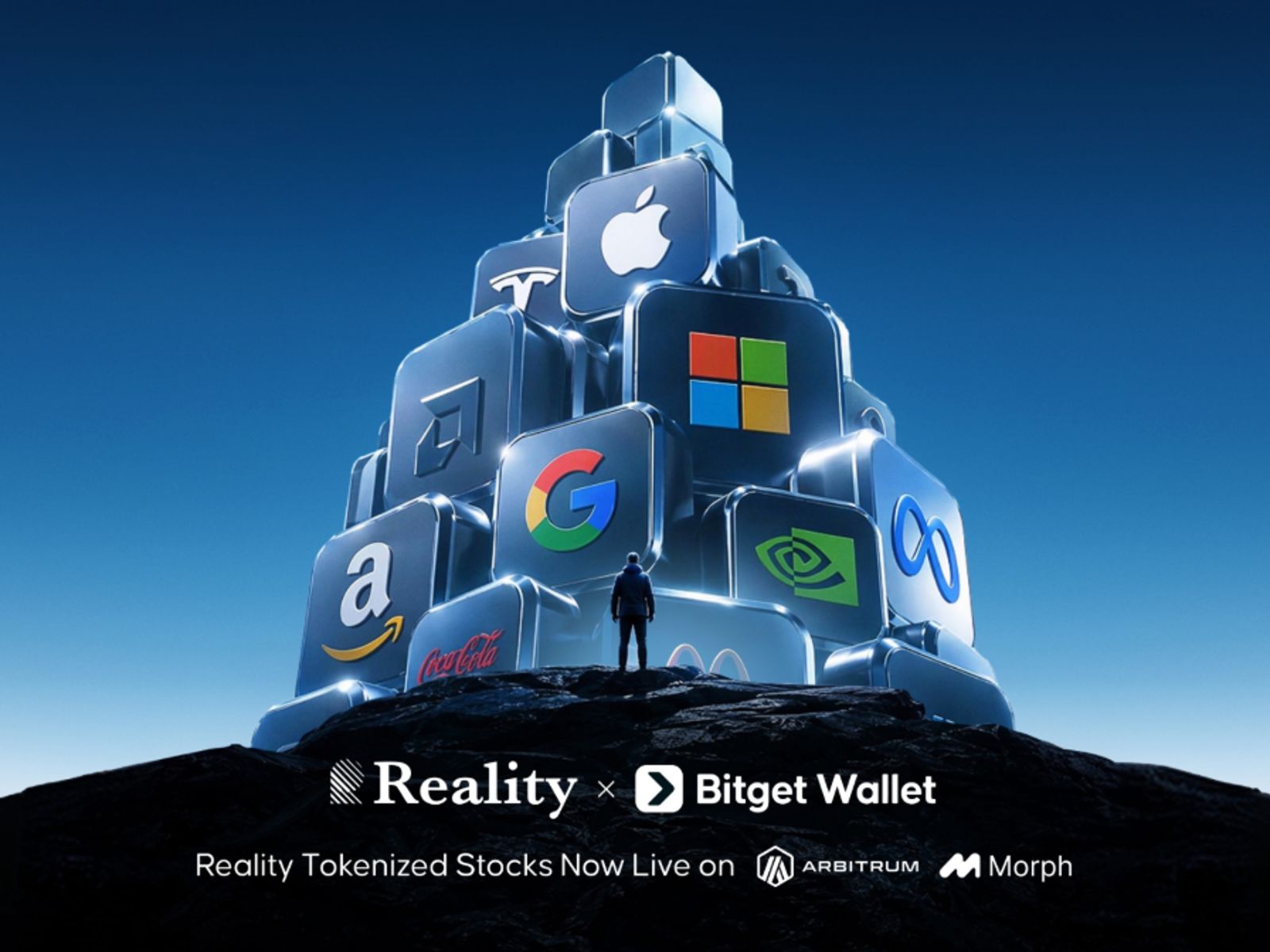
Yes. rToken is no longer limited to centralized exchange trading.
Since August 19, 2026, Reality rTokens have supported on-chain trading and holding, with the initial integration covering Arbitrum and Morph. The on-chain launch covered more than 600 Reality-provided U.S. stocks and ETFs.
Users can use supported on-chain assets such as ETH, USDT and USDC to swap into available rTokens through compatible Web3 infrastructure.
The on-chain model uses a mint-and-burn mechanism:
-
Buy: Corresponding rTokens are minted based on the completed purchase and distributed to the user's wallet.
-
Sell: The corresponding rTokens are burned as redemption and settlement are processed.
This gives supported rTokens another important characteristic: portability. Stock-linked exposure does not always have to remain inside a centralized trading account and can instead interact with supported blockchain environments.
What Are Bitget rToken Trading Fees?
Bitget currently offers a discounted fee structure for rToken spot trading.
As of September 2026, the ongoing promotion keeps the base maker and taker trading fee at 0.05%, representing a 50% discount from the previous base rate. Bitget has not announced a fixed end date for the extension.
VIP and PRO users may qualify for lower rates, while eligible users paying fees with BGB can receive an additional fee discount. For example, the published VIP 0 to VIP 3 rate is 0.05% before BGB deduction and 0.04% with the applicable 20% BGB fee deduction.
Trading fees and promotions can change, so users should always review the current fee schedule before placing an order.
Does Bitget rToken Support API Trading?
Yes. Bitget fully opened its Reality Stock Spot API on August 11, 2026, removing the previous general whitelist-registration requirement for standard access.
The API supports functions including:
-
Market and instrument information
-
Tickers and candlestick data
-
Order-book data
-
Account and asset queries
-
Market and limit orders
-
Order cancellation
This gives professional traders, algorithmic traders and institutions another way to integrate rToken into automated trading systems. API access and rate limits depend on the applicable account and access tier.
Is Bitget rToken a DeFi Stablecoin?
No. Bitget rToken is not a DeFi stablecoin.
A stablecoin is generally designed to maintain a relatively stable value against another asset, such as the U.S. dollar. USDT, for example, is designed to track the value of USD.
An rToken works differently. Its value is designed to follow the corresponding U.S. stock or ETF.
For example:
-
rNVDA follows NVIDIA-linked economic exposure.
-
rAAPL follows Apple-linked economic exposure.
-
rTSLA follows Tesla-linked economic exposure.
-
rSPY follows SPY ETF-linked economic exposure.
-
rQQQ follows QQQ ETF-linked economic exposure.
If NVIDIA stock rises or falls, rNVDA is designed to reflect that market movement. It is therefore a tokenized stock-linked asset rather than a dollar-pegged stablecoin.
The name “rToken” may sound similar to other crypto terminology, but it refers to Reality-issued tokenized real-world assets. It is not BGB, not a stablecoin and not simply a yield token.
Read more: Bitget rToken Explained: Tokenized U.S. Stock Exposure, Not a DeFi Stablecoin (2026 Guide)
Bitget rToken vs. BGB: Key Differences
Bitget rToken and BGB both operate within the Bitget ecosystem, but they serve completely different purposes.
Bitget rToken is a tokenized real-world asset. It is linked to an underlying stock or ETF and is primarily designed to provide economic exposure to traditional financial markets.
BGB, or Bitget Token, is an ecosystem token. It is not backed by NVIDIA, Apple, Tesla or another U.S. stock. Its value and utility are connected to the Bitget ecosystem rather than the performance of a specific traditional security.
| Feature |
Bitget rToken |
BGB |
| Product type |
Tokenized real-world asset |
Ecosystem token |
| Issuer/infrastructure |
Reality |
Bitget ecosystem |
| Main purpose |
Access stock and ETF-linked exposure |
Ecosystem utility |
| Linked to stocks or ETFs? |
Yes |
No |
| Examples |
rNVDA, rAAPL, rTSLA, rSPY, rQQQ |
BGB |
| Trading currency |
USDT for supported rToken pairs |
Depends on supported BGB markets |
| Main price driver |
Corresponding stock or ETF |
Market demand and ecosystem factors |
| Dividend eligibility |
Available for eligible rTokens |
Not a stock-dividend product |
| Margin/collateral utility |
Available for eligible rTokens |
Depends on supported Bitget products |
Bitget rToken expands the range of traditional assets users can access, while BGB serves a different role within Bitget's broader ecosystem.
Bitget rToken vs. Bitget Stock+: Key Differences
Bitget rToken and Bitget Stock+ both provide access to U.S. markets through Bitget, but they are fundamentally different products.
The easiest way to understand the distinction is that Stock+ focuses on direct ownership of real U.S. shares, while rToken turns stock-linked exposure into a crypto-native tokenized asset with broader utility across Bitget and supported blockchain environments.
Stock+ currently provides access to more than 10,000 U.S. stocks and ETFs, fractional trading from 0.0001 shares and 24/5 trading. Users fund their Stock+ account with USDC and buy real shares held through compliant brokerage infrastructure.
rToken takes another route. Users trade Reality-issued tokenized stocks with USDT and can potentially use supported holdings as margin, collateral, loan collateral, strategy assets or on-chain assets.
| Feature |
Bitget rToken |
Bitget Stock+ |
| Main positioning |
Crypto-native U.S. stock exposure |
Direct U.S. stock investing |
| Product type |
Tokenized stock/ETF |
Real U.S. shares and ETFs |
| Ownership structure |
Economic exposure through Reality-issued rToken |
Direct stock ownership through brokerage structure |
| Funding/trading asset |
USDT |
Stock+ account funded with USDC |
| Product coverage |
Hundreds of tokenized stocks and ETFs |
10,000+ U.S. stocks and ETFs |
| Trading access |
Selected rTokens available 24/7 |
24/5 |
| Fractional access |
Depends on rToken market rules |
From 0.0001 shares |
| Dividends |
Eligible net cash dividends distributed in USDT |
Shareholder dividends processed through Stock+ |
| Margin utility |
Eligible rTokens can be used in Cross-Asset UTA |
Primarily focused on direct stock ownership |
| Crypto Loans |
120+ eligible rTokens supported as collateral |
No |
| Automated strategies |
Auto-Invest, Smart Portfolio, Trend-Following and more |
Different product scope |
| On-chain portability |
Supported through Arbitrum and Morph |
No |
| Main use case |
Active, capital-efficient and crypto-native stock exposure |
Direct stock investing and portfolio building |
Neither product replaces the other. They serve different ways of accessing U.S. markets.
Stock+ is designed for users who prioritize direct share ownership and a broader broker-style stock universe. rToken is designed for users who want stock-linked exposure to behave more like a crypto asset, with USDT trading, broader trading hours, collateral utility, automated strategies and on-chain portability.
Read more: Bitget Stock 2.0: Two Doors to U.S. Stocks — Stock+ vs rToken
How to Start Trading Bitget rToken
Getting started with Bitget rToken is designed to be simple for users who already understand basic crypto trading. Instead of opening a separate stock brokerage account, eligible users can access supported rTokens directly through Bitget and trade them with USDT.
Step 1: Create a Bitget Account
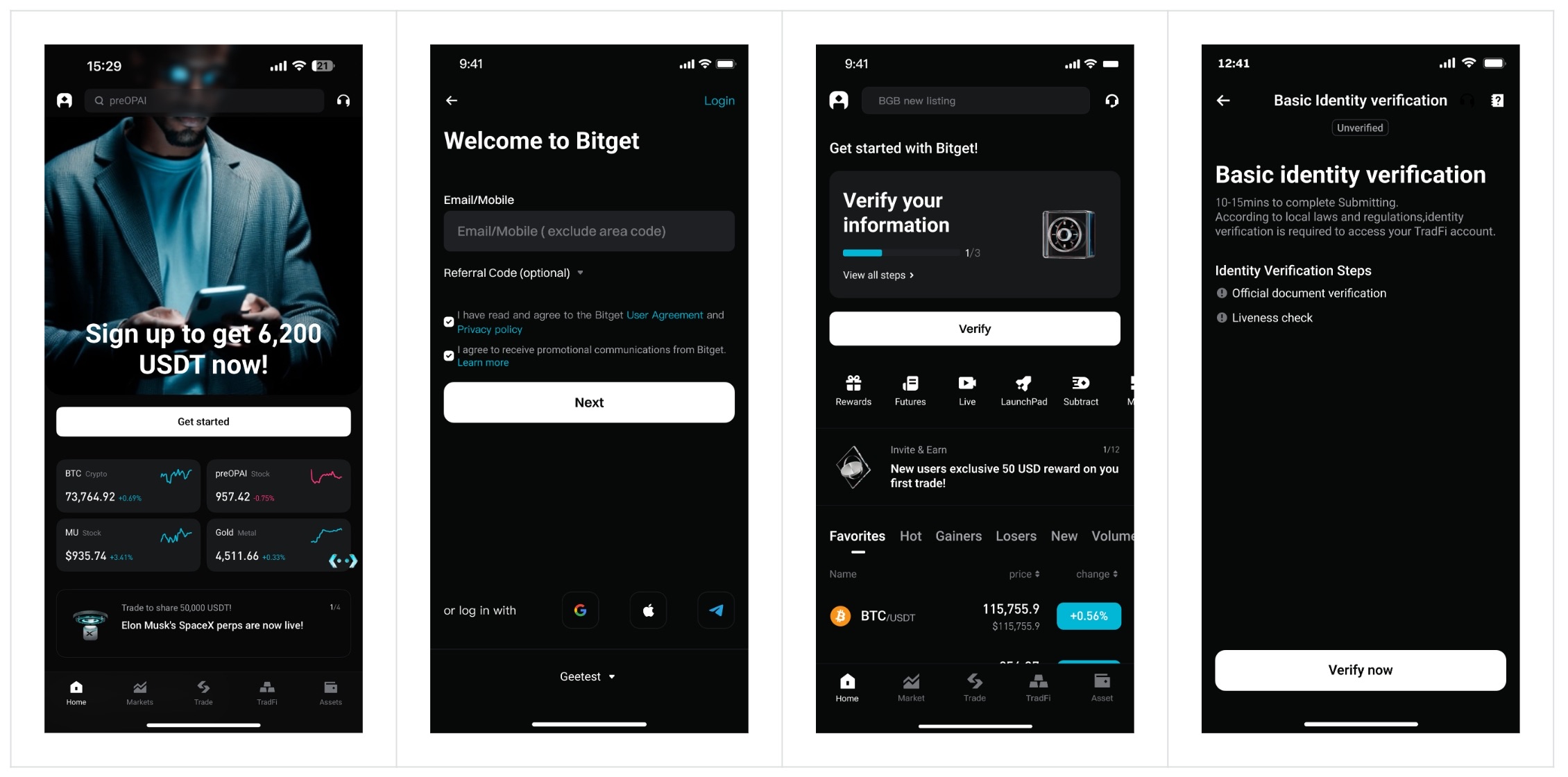
Go to the official Bitget website or app and register with an email address or mobile number.
Before depositing or trading, users should protect their account with security features such as two-factor authentication, an anti-phishing code and withdrawal protection.
Step 2: Complete Identity Verification

Access to Bitget rToken may depend on identity verification, account status, region, regulatory requirements, and Bitget’s live product rules.
Users should complete the required verification steps before trading. This helps ensure they are eligible to access supported rToken markets and related features.
Step 3: Deposit or Buy USDT
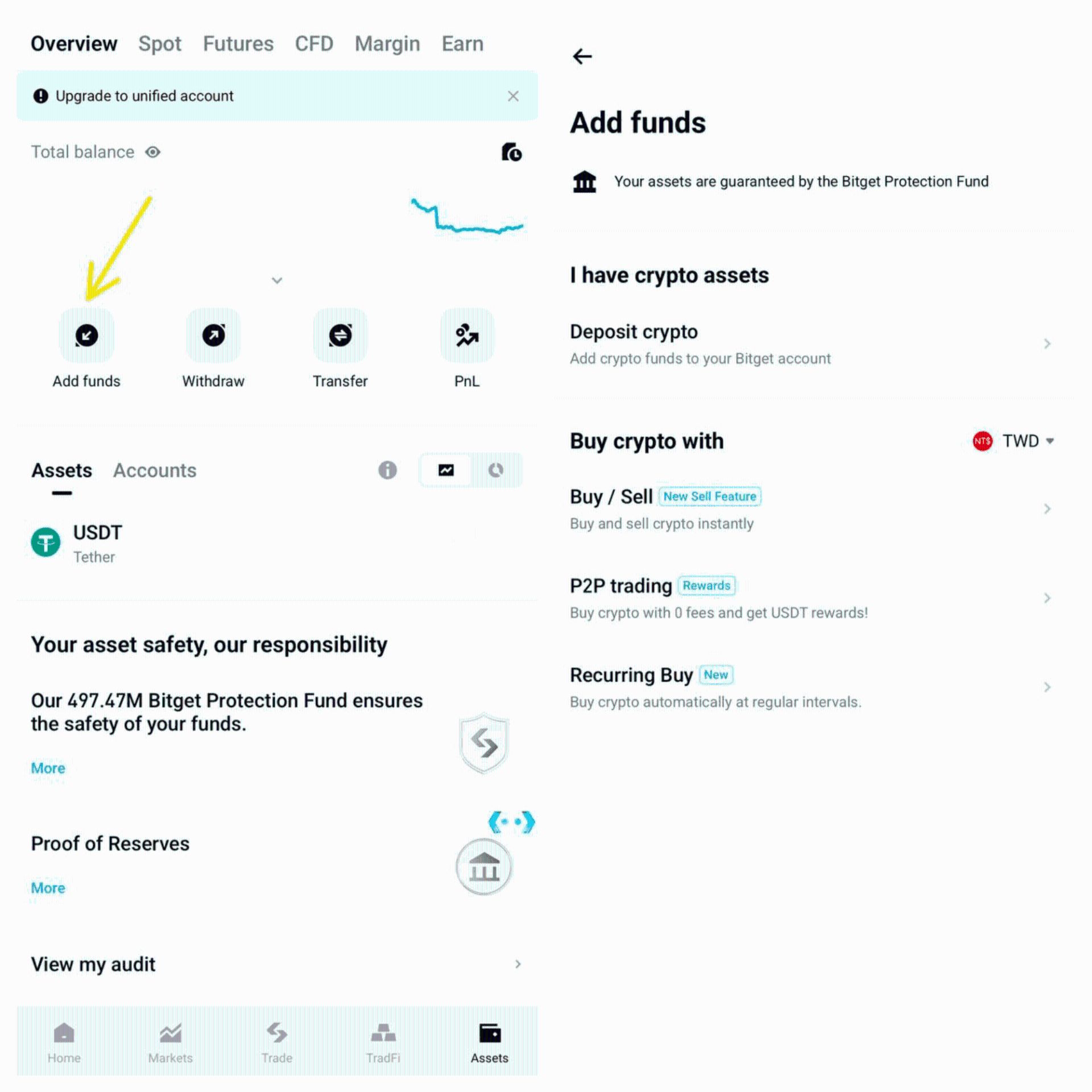
Bitget rToken is traded with USDT, so users need USDT in their Bitget account before placing an order.
Users can fund their account by depositing USDT from another wallet or exchange, or by buying USDT through supported fiat channels or P2P methods. When depositing USDT, users should choose the correct blockchain network. Common USDT networks may include TRC-20, ERC-20, and other supported chains, depending on availability. Sending funds to the wrong network may lead to loss of assets.
Step 4: Search for a Supported rToken
Search for the stock or ETF you want to access.
rToken uses the format r + ticker, so a user looking for NVIDIA can search for rNVDA, while Apple can be found as rAAPL.
Always confirm the exact ticker and product before trading.
Step 5: Review Trading Conditions
Before placing an order, check the product details for the selected rToken.
Important points include:
-
Current trading hours
-
Whether 24/7 trading is supported
-
Available liquidity and spreads
-
Trading fees
-
Margin eligibility
-
UTA collateral status
-
Dividend eligibility
-
Corporate-action rules
-
Deposit and withdrawal networks
-
Regional availability
Not every rToken has exactly the same features.
Step 6: Choose Spot or Margin Trading
For a basic purchase, users can select Spot and buy the rToken using available USDT.
Eligible users trading a supported pair can also select Margin, choose the available leverage, enable automatic borrowing and place a margin order.
Margin is optional. Users who simply want stock-linked exposure can continue using standard spot trading without leverage.
Step 7: Place the Order
Select the preferred order type.
A market order is designed to execute against available liquidity at the best available market prices, while a limit order allows the user to specify the price at which they want to buy or sell.
Users should check the estimated order value, fees and execution conditions before confirming the trade.
Step 8: Decide How You Want to Use the rToken
Buying the rToken does not have to be the end of the process.
Depending on eligibility and current product support, users may be able to:
-
Hold the rToken
-
Use it as UTA margin
-
Borrow against it through Crypto Loans
-
Trade it with margin
-
Add it to Auto-Invest
-
Include it in Smart Portfolio
-
Use supported trading bots
-
Participate in supported structured strategies
-
Transfer or hold supported rTokens on-chain
This flexibility is one of the biggest differences between rToken and a conventional stock position.
What Users Should Know Before Trading Bitget rToken
Bitget rToken makes U.S. stock exposure easier to connect with crypto capital, but users should still understand how the product differs from holding ordinary shares.
-
rToken provides economic exposure, not direct registered share ownership: Holding an rToken is not the same as owning shares through a traditional brokerage account.
-
Voting rights are generally not included: rToken holders generally do not appear on the underlying company's shareholder register and do not receive ordinary shareholder voting rights.
-
Availability varies: Supported assets, features, margin eligibility, collateral ratios, trading hours and regional access can change.
-
Not every rToken trades 24/7: Selected assets support weekend and around-the-clock trading, while others may have different trading schedules.
-
Prices outside normal U.S. market hours may behave differently: Liquidity can vary when the underlying market is closed, potentially affecting spreads and execution.
-
Dividend payments are generally net of applicable withholding: Current eligible U.S. cash-dividend distributions typically apply withholding before the remaining amount is credited in USDT.
-
Margin increases risk: Leveraged rToken positions can magnify both profits and losses and may be subject to liquidation.
-
Using rTokens as collateral also introduces risk: Falling rToken prices can reduce available margin, borrowing capacity or collateral value.
-
On-chain activity has separate risks: Network conditions, wallet security, smart-contract infrastructure and supported-chain availability should be considered when using rTokens outside the centralized trading environment.
-
The underlying stock still matters: Earnings reports, interest rates, Federal Reserve policy, company news, sector trends and broader U.S. market movements can all affect an rToken's value.
The added flexibility can improve capital efficiency, but it also creates more ways to use leverage and collateral. Users should understand each feature separately instead of assuming that all rToken strategies carry the same level of risk.
Conclusion
Bitget rToken marks a major step in bringing U.S. stock exposure into the crypto era. Instead of moving through banks, currency conversion, brokerage accounts, and separate platforms, eligible users can access selected U.S. stocks and ETFs with USDT directly inside Bitget. With 1:1 backing, eligible dividend distribution, corporate-action handling, selected 24/7 trading, and an expanding range of tokenized stocks and ETFs, rToken gives Wall Street exposure a more flexible, crypto-native form.
The real opportunity, however, goes well beyond access. Supported rTokens can now be traded, used as margin or collateral, borrowed against, integrated with automated strategies, and moved on-chain, turning stock-linked exposure into a more active part of a user's broader portfolio. By bringing these capabilities together in one ecosystem, Bitget is pushing tokenized stocks beyond simple ownership and toward real utility. The result is U.S. stock exposure that is easier to access, more capital-efficient, and built for the way crypto users already trade.
Wall Street, now built for crypto. Join Bitget and start trading rTokens with USDT.
Disclaimer: The information in this article is provided for educational and informational purposes only and does not constitute investment, financial, legal, tax or trading advice. rTokens provide tokenized economic exposure to underlying assets and are not the same as direct ownership of registered shares. Trading availability, fees, leverage, collateral eligibility, dividends, tax treatment and other product features may vary by asset, account and region and may change over time. Margin trading, borrowing, structured products and on-chain activities involve additional risks, including the potential loss of capital. Users should review the latest product terms and consider their own circumstances before trading.


- What Is Bitget rToken?
- How Bitget rToken Works
- What Makes Bitget rToken Different From Other Tokenized Stocks?
- Key Benefits of Bitget rToken
- Can Bitget rToken Be Traded On-Chain?
- What Are Bitget rToken Trading Fees?
- Does Bitget rToken Support API Trading?
- Is Bitget rToken a DeFi Stablecoin?
- Bitget rToken vs. BGB: Key Differences
- Bitget rToken vs. Bitget Stock+: Key Differences
- How to Start Trading Bitget rToken
- What Users Should Know Before Trading Bitget rToken
- Conclusion
 How Federal Reserve Interest Rate Hikes Impact Global Assets2026-09-29 | 10m