
Tesla (TSLA) Q3 Earnings Preview: Can Deliveries Beat Reverse the Streak of EPS and Revenue Misses?
 Bitget2026/10/20 03:31
1. Investment Highlights
Tesla (TSLA.US) is scheduled to report its fiscal 2026 third-quarter results after the U.S. market close on October 21, 2026. Wall Street consensus expects revenue of approximately $27.8–28.3 billion (roughly flat to slightly down year-over-year) and adjusted EPS of about $0.43–0.45 (down roughly 10%–14% year-over-year). The company has already reported Q3 deliveries of 486,532 vehicles (about -2.1% YoY, but above estimates) and energy storage deployments of 13.7 GWh (about +9.6% YoY).
The focus of this report is not the delivery figures themselves (already released), but whether automotive gross margins can stabilize, whether the energy business can continue to contribute meaningfully, and whether progress on Robotaxi/FSD commercialization can support the valuation. The market will also watch free cash flow pressure amid elevated capital expenditures and management’s commentary on full-year guidance and the AI narrative.
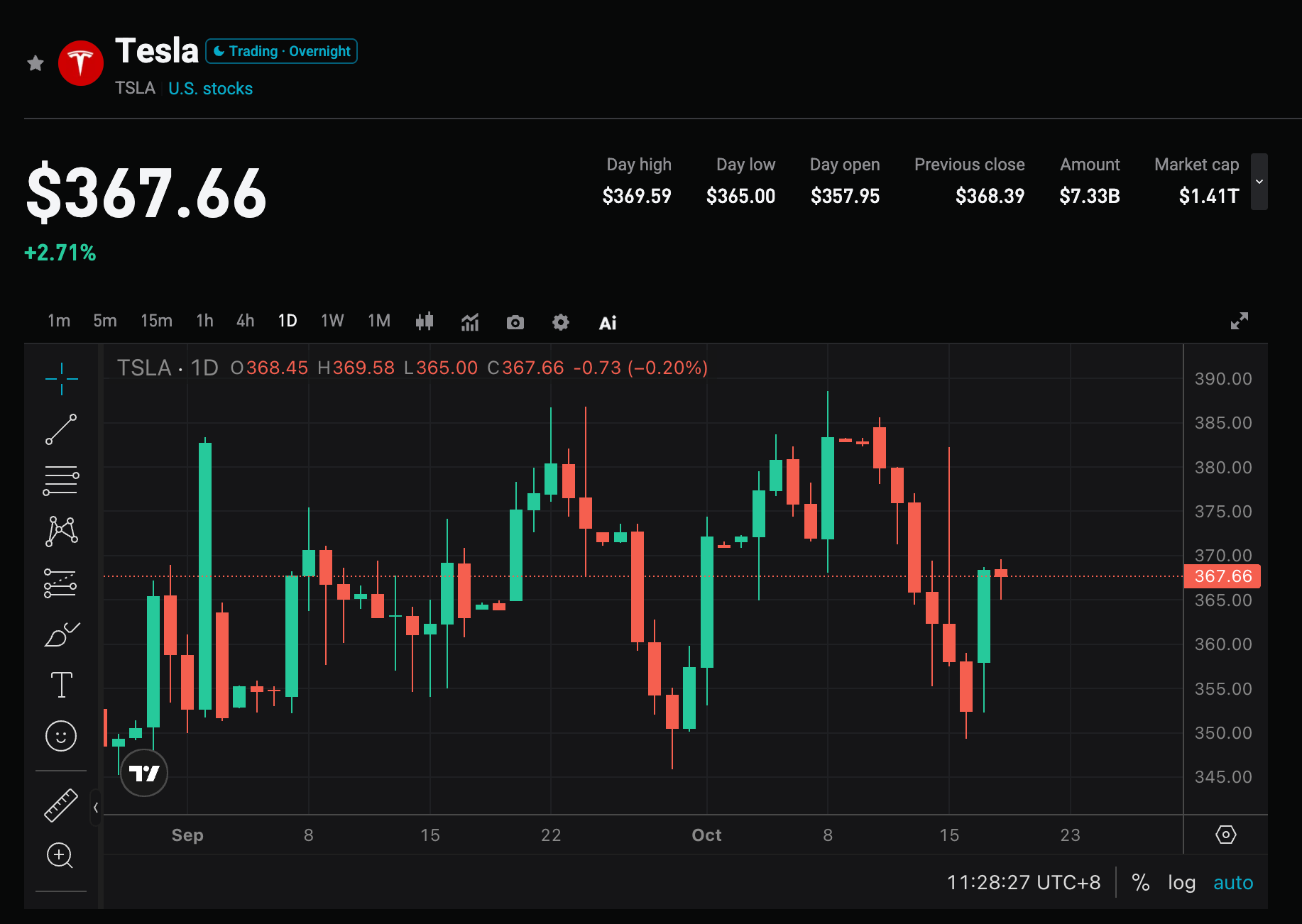
Focus 1: Can the Deliveries Beat Translate into a Reversal of Consecutive Misses
Q3 deliveries beat consensus by roughly 25,000 units, yet revenue expectations remain near or slightly below the year-ago level. Over the past 10 quarters, Tesla has missed revenue estimates six times and EPS estimates five to seven times, with a relatively low beat rate overall. If revenue lands near the higher end of the $28.3 billion range and EPS reaches or exceeds $0.45, it would help reverse the narrative of “strong deliveries but weak profitability.” Another miss would reinforce concerns about ongoing margin compression.
Focus 2: Automotive Gross Margins and Product Mix
Automotive remains the primary revenue driver, with auto revenue expected to face year-over-year pressure. Investors will focus on whether automotive gross margin improves from Q2 and on the mix contribution from Model 3/Y versus other models (including Cybertruck). Raw material costs, pricing strategy, and inventory digestion will directly affect profitability. Signs of margin stabilization would support the valuation; further declines could heighten questions about demand and pricing power.
Focus 3: Energy and Services as a Growth Offset
Energy storage has performed well for multiple consecutive quarters, with Q3 deployments of 13.7 GWh. Energy and services revenue is expected to act as an important offset. The market will watch whether growth and margins in this segment can continue to expand their contribution to overall results. Sustained strong growth in energy would partially cushion automotive pressure and reinforce Tesla’s positioning as a comprehensive energy technology company.
Focus 4: Robotaxi, FSD, and Capital Expenditure Pace
Tesla initiated limited Robotaxi operations in Q3. Investors will closely monitor paid miles, FSD subscription trends, and any updates to the commercialization timeline. Full-year capital expenditures are expected to exceed $25 billion, and Q3 free cash flow is likely to remain under pressure. Whether the heavy investment can translate into visible AI and autonomous driving revenue is key to the stock’s medium- to long-term direction.
3. Risks and Opportunities
Upside Catalysts:
- Revenue and EPS meaningfully beat consensus, with signs of improvement in automotive gross margins.
- Strong energy business growth, better-than-expected Robotaxi/FSD commercialization progress, and upward revisions to related full-year guidance.
- Clearer management commentary on the return path and timeline for elevated capital expenditures.
Downside Risks:
- Another miss on revenue or EPS, with further deterioration in automotive gross margins.
- Sharply negative free cash flow or a further increase in capex guidance without corresponding revenue progress.
- Robotaxi/FSD progress falling short of expectations, amplifying pressure on the elevated valuation.
4. Trading Strategy Suggestions
Bullish Case: If revenue, EPS, and gross margins improve simultaneously, and management delivers constructive signals on Robotaxi and the energy business, this could strengthen confidence in Tesla’s long-term AI and autonomous driving value and support valuation recovery.
Bearish Risk: If profitability remains under pressure, free cash flow deteriorates, or autonomous driving progress is lackluster, profit-taking could emerge, particularly in a high-volatility tech environment.
Key Metrics to Watch:
- Total revenue and year-over-year growth
- Adjusted EPS and automotive gross margin
- Energy business revenue and deployment volume
- Free cash flow and capital expenditures
- Robotaxi/FSD operating metrics and full-year guidance
Trading Suggestions: If results beat and guidance is constructive, consider opportunities on any pullback. If data is in-line or guidance is cautious, be mindful of short-term volatility and avoid chasing strength. Position sizing and stop-loss levels should be adjusted according to individual risk tolerance.
Disclaimer: The above content is for reference only and does not constitute investment advice.
Disclaimer: The content of this article solely reflects the author's opinion and does not represent the platform in any capacity. This article is not intended to serve as a reference for making investment decisions.
You may also like
Nasdaq Plunge Triggers AI Debt Crisis: Trillions in Capital Shift to US Treasuries
In October 2026, the Nasdaq Index plummeted as high-leverage debts from AI giants such as CoreWeave triggered default panic. Capital rapidly shifted from high-risk AI infrastructure to 10-year US Treasury bonds, highlighting an intense pricing power struggle between the private sector and sovereign governments over long-term savings.
Storage stocks halved with a P/E ratio of just 2: Bank of America (BAC.US) asserts the cycle is not over
SK Hynix and Samsung's stock prices have fallen more than 50% from their peaks. Bank of America points out their projected P/E ratio for 2027-28 is only 2-3 times, at historic lows. The report believes the current correction is disconnected from fundamentals, AI storage demand remains strong, long-term profitability drivers are intact, and the risk-reward ratio is better than at historical bottoms.
AI drops 5% masking improvement in breadth, UBS (UBS.US): Probability of correlated rise underestimated
According to a report by UBS, although the AI sector declined by 5% last week, market breadth has improved and de-risking is accelerating. As rate fluctuations dominate returns and AI demand remains strong, the probability of technology and non-technology sectors rising together is underestimated. UBS recommends allocation to industrials and utilities.
PENGU Prints TD Sequential Buy Signal — Last Three Led to +78% and +67% Rallies

Crypto prices
More


