
US Dollar: Rising Short-term Pullback Risk

Morning FX
Due to high oil prices and U.S. Treasury yields remaining elevated, combined with European fiscal risks generating safe-haven demand, and the relative strength of U.S. equities attracting capital inflows, the U.S. Dollar Index has risen for four consecutive weeks, with the euro dropping to a 16-month low. However, the dollar is now in an overbought territory, and the risk of a short-term correction is increasing.
1. Sharp Drop in October Rate Hike Probability, Yield Differential Advantage Weakens
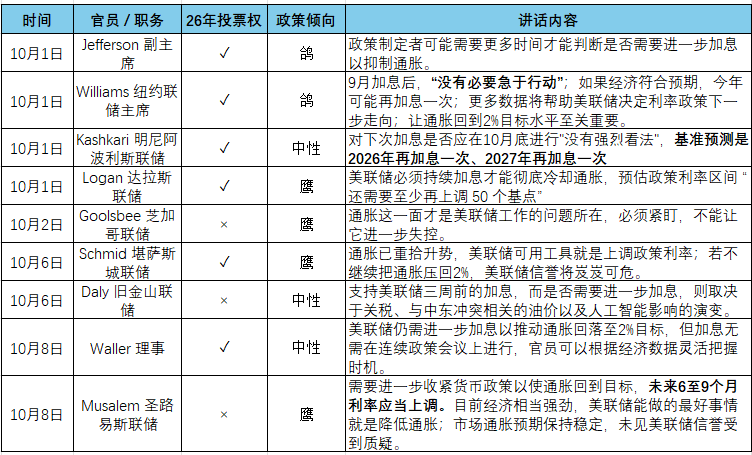
Weaker September employment data and easing core inflation have reduced the necessity for a Federal Reserve rate hike in October. Additionally, recent dovish comments from Fed officials have pushed the market-implied probability of an October rate hike down from over 70% to less than 20%.
Moreover, recent U.S. data also shows signs of cooling. Last Friday, the University of Michigan's preliminary U.S. Consumer Sentiment Index for October dropped to 46.3, declining for the third consecutive month and hitting the lowest level since May; the Current Economic Conditions Index fell to 44.7, a record low.
With the midterm elections approaching, Trump is eager for oil prices to fall. This week, Trump publicly stated that he had a “very successful” call with Russian President Putin, where they reached an agreement on oil supply: Russia will immediately supply over 300,000 tons of diesel to the U.S. and the global market, increase supplies to 500,000 tons in November, and further expand to 1 million tons in December.
2. Increased Probability of Democratic Sweep in Midterms, Bearish for the Dollar
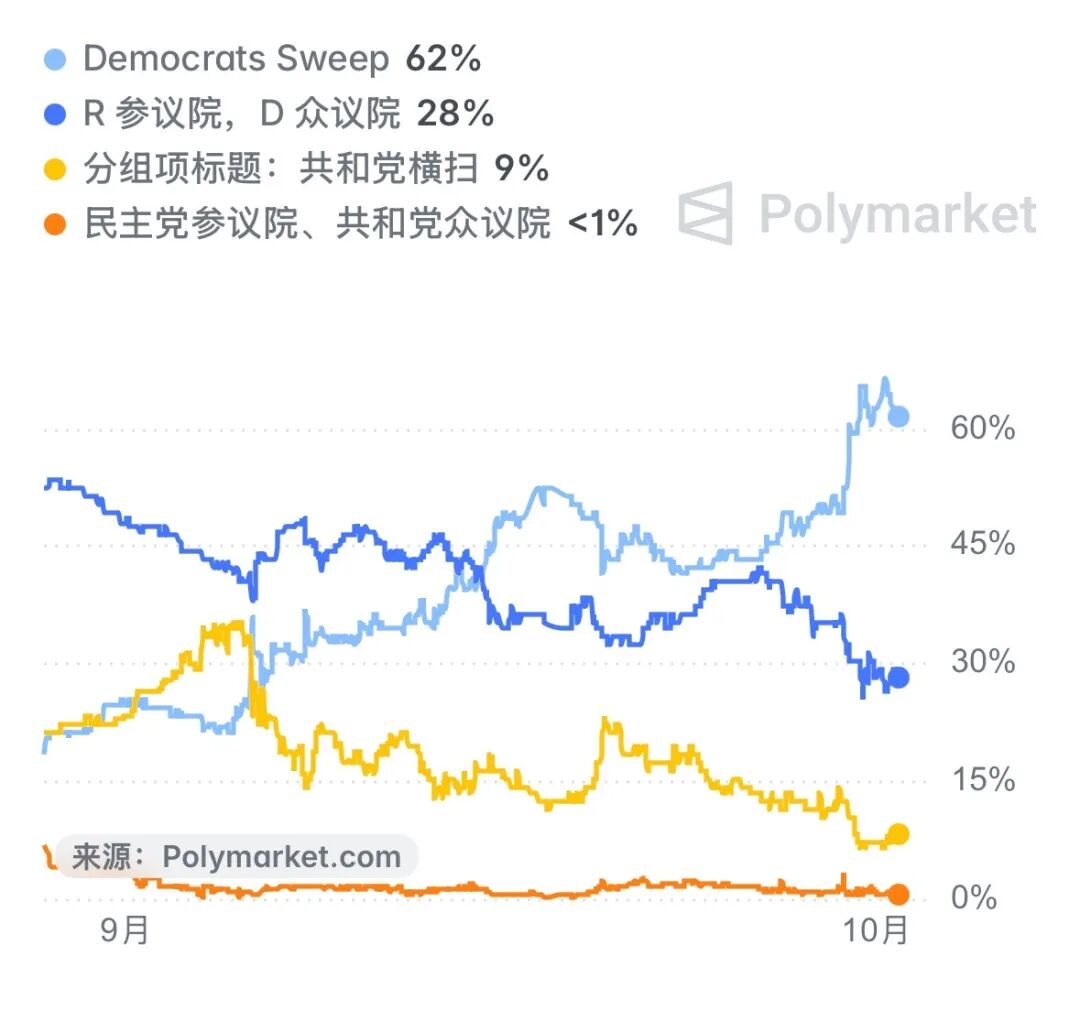
The U.S. midterm elections are approaching on November 3. According to prediction market Polymarket, the probability of a Democratic sweep of both houses is around 62%. In this scenario, a divided government would form, with the market pricing in obstacles to fiscal expansion: Republican-led tax cuts and industrial stimulus policies would likely be blocked by Congress, U.S. fiscal impulse would fade, growth expectations would be revised lower, leading to a decline in Treasury yields and a bearish outlook for the dollar.
3. France-Germany Yield Spread and Euro Shorts Both at Extreme Levels
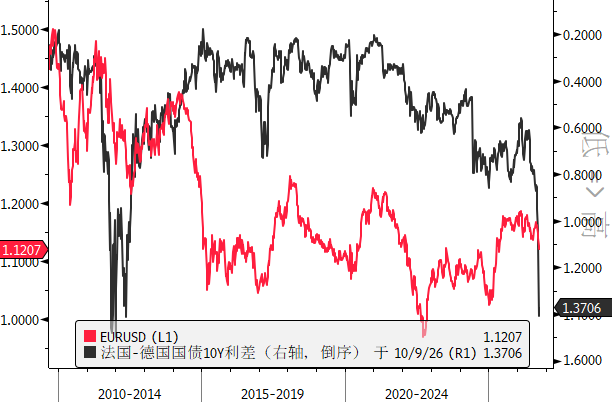
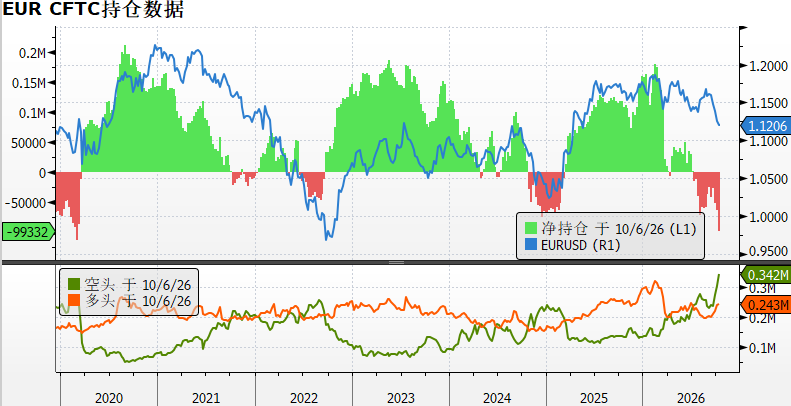
The current 10-year government bond yield spread between France and Germany is at 137bp, slightly down from the October peak of 160bp, and stands at its lowest since the 2011 European debt crisis. Meanwhile, CFTC non-commercial net short positions in the euro are also at their most extreme since the Russia-Ukraine war in 2020.
If the French 2027 budget proposal passes smoothly and is accompanied by credible fiscal consolidation measures, the France-Germany 10-year yield spread may see a staged recovery. Key upcoming events to watch include the Moody’s sovereign rating decision on October 23, and the EU’s autumn fiscal assessment.
Key Focus: This Wednesday's U.S. CPI Data
Towards the end of September, rising U.S. retail gasoline prices are expected to push overall September inflation higher, and the market expects September’s CPI, which will be released this Wednesday, to rise by 0.6% month-on-month, above the previous 0.4% and marking the largest increase in five months. However, core CPI is expected to slow marginally, rising 0.2% month-on-month and 2.5% year-on-year. If the data slows, it could trigger a short-term correction in the dollar.
Disclaimer: The content of this article solely reflects the author's opinion and does not represent the platform in any capacity. This article is not intended to serve as a reference for making investment decisions.
You may also like
Silver Price Forecast: XAG/USD struggles near two-month lows ahead of US CPI
FirstService Residential wins Lagoon Valley community management mandate in California
10-Yr Benchmark Govt Yields - U.S. vs Other Nations
Impossible or Not? Top Investor Weighs In On $1,000 XRP Price Debate
Crypto prices
More


