
10-year U.S. Treasury yields break 5.1%: When will the U.S. Treasury TGA start buybacks?

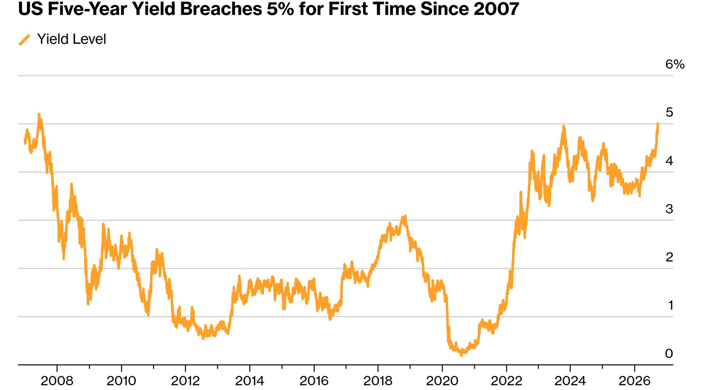
On September 23, the US Treasury market experienced another sell-off, with the 10-year US Treasury yield rising above 5% again, reaching as high as 5.13% during trading; the 30-year yield was around 5.4%, hitting its highest level since 2007; the 5-year yield also surpassed 5% for the first time since 2007.
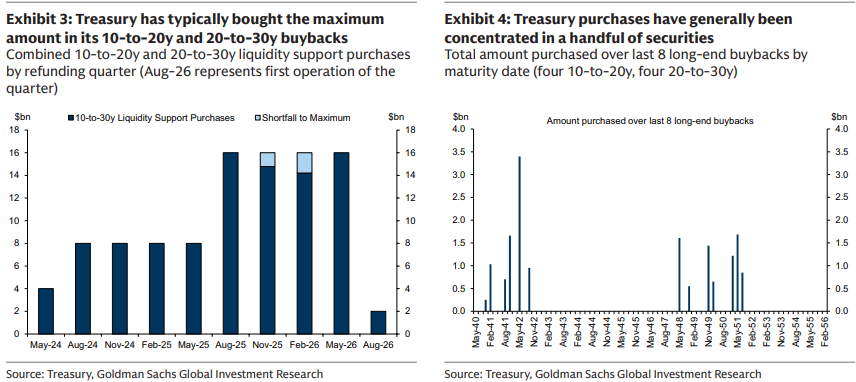
Amid the sharp decline in bond prices, the US Treasury announced on September 23 that it would repurchase up to $600 million in 20-30 year long-term bonds the following day. This marks the second round of such operations after the first round of increased repurchases on September 10. Notably, the first $600 million repurchase ultimately completed only about $520 million, falling short of market expectations and leading to a rapid rise in long-end rates.
The US Treasury is considering regularly investing part of its General Account (TGA) funds into the private repo market, or using them to finance its long-term bond repurchase program. The New York Fed has previously discussed this proposal, concluding that under the ample reserves system, the scale of TGA repo investments would be limited and should be operated flexibly to avoid intensifying money market volatility. The discussions also covered the need for predictability, arranging operations during the morning's main repo trading window when possible, and setting TGA balance thresholds, all with the aim of avoiding sharp money market fluctuations.
However, the above discussions have focused mainly on the framework of principles; concrete details such as the exact scale, start date, and trigger threshold for these operations still require clarification from the Treasury. In May of this year, the US Treasury had already proposed this idea. Financing long-term bond buybacks by issuing more short-term debt would shorten debt maturity profiles, increase refinancing risk, and intensify market concerns; whereas the TGA can provide immediate funds without increasing short-term bond supply, thereby avoiding additional pressure at the front end.
Therefore, related discussions are expected to shift towards concrete implementation plans in the near future, and the market should pay particularly close attention.
TGA intervention impacts the front end first, rather than directly supporting the long end
The TGA is the Treasury's main operational account at the Federal Reserve, currently with a balance of about $950 billion. When Treasury cash remains in the TGA, the funds stay within the Fed system; once cash flows out of the TGA into the private sector, it becomes bank reserves.
Disclaimer: The content of this article solely reflects the author's opinion and does not represent the platform in any capacity. This article is not intended to serve as a reference for making investment decisions.
You may also like
BlackBerry Trims Secure Communications Forecast as Precaution -- Market Talk
IRLAB names Janne Backman board chair, replacing Carola Lemne
McDonald's US Same-Store Sales May Remain Under Pressure, RBC Says
Saudi Arabia’s oil shipments to Asia surged to nearly 100 million barrels, with Aramco proactively covering transportation and delivering directly to China, India, and Japan-South Korea: Supply shortage expectations meet the reality of correction.
According to reports, since the middle of last week, Saudi Arabia has sold approximately 100 million barrels of crude oil to China, India, Japan, and South Korea, with delivery periods covering October and November. At the same time, Saudi Aramco has made a rare commitment in these transactions to handle logistics and transportation, delivering the crude oil directly to Asian customers. Previously, due to soaring oil prices, Asian refineries had been considering reducing operating rates. This large-scale supply has to some extent mitigated the supply risks faced by Asia.
Crypto prices
More


