
The collective strong rebound of Asian currencies

Morning FX
Since July, Asian currencies such as the Korean won, Taiwan dollar, and Japanese yen have started to appreciate one after another, with the appreciation slope of the Korean won and Japanese yen being the steepest in recent years. Asian currencies have reversed their weakness in recent years, appreciating nearly 10% in just two months and rapidly correcting their extremely undervalued state.
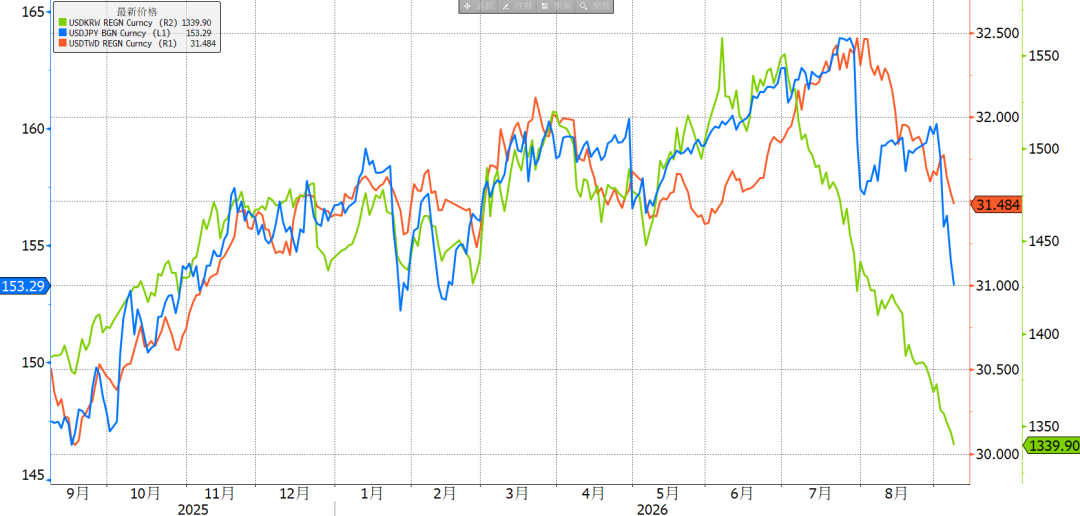
Chart: Asian currencies collectively appreciate
With the U.S. Dollar Index remaining steady and global monetary policies resonating together, the substantial appreciation of the Japanese yen and Korean won has been a collective reversion to fundamentals.
1. After the Korean won, short covering in the Japanese yen accelerates
This year, we have discussed multiple times the confusing divergence between the strong fundamentals of Japan and South Korea and their weak currencies. Driven by AI manufacturing, Japan’s and South Korea’s trade surpluses have climbed for years, their stock markets have seen huge gains, and their central banks are in a tightening cycle with the interest rate differential with the U.S. having narrowed sharply from high levels. Inflation and wage growth have risen, the economy is at its best level in years, but the exchange rates of both the yen and won have repeatedly hit new lows. USD/JPY and USD/KRW even reached all-time highs of 163 and 1560, and traditional macroeconomic models have completely failed.
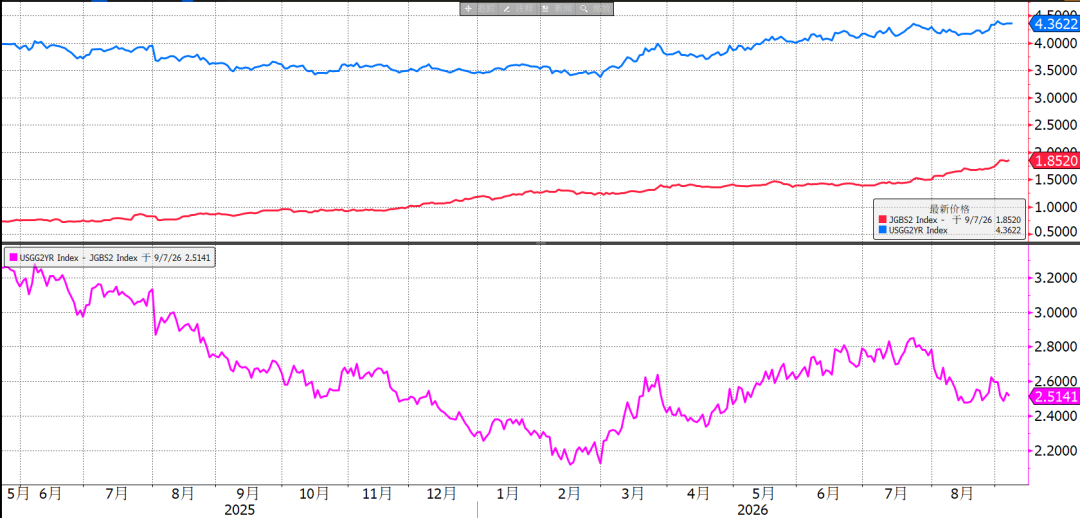
Chart: The Japan-US two-year interest rate differential has come down from highs
The underlying reason can only be attributed to structural contradictions. In the Korean stock market, foreign investors hold over 50%; after the surge, proportion requirements triggered massive selling, keeping the won under pressure. As for the yen, there are market concerns over fiscal issues and bets that the Bank of Japan will not dare to raise rates sharply. With capital outflows and weak corporate willingness to settle foreign exchange, even with attractive exchange rates, companies have been reluctant to hedge.
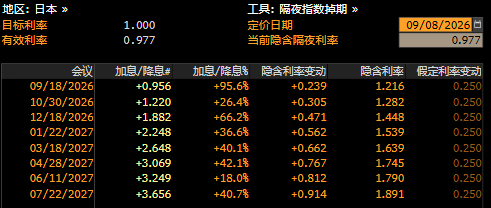
Chart: Bank of Japan expected to hike one more time this year
But the greater the divergence, the faster the pace of short covering when sentiment reverses. Faster rate hikes by the Bank of Japan have directly shaken the foundation of the carry trade. The National Pension Fund has shifted direction, and the pace of capital outflows is now expected to slow. As more people realize the appreciation risk of the yen, speculators are the first to exit, then forcing corporates to join the wave of settling foreign exchange. This is very similar to what happened last year with the Chinese yuan, and what happened with the Korean won two months ago.
2. Will the next one be the yuan?
The yen, won, and Taiwan dollar have already appreciated for the most part, while the yuan remains unmoved, still following the script of a slow appreciation. This may be because the yuan previously gained significantly against other Asian currencies, and its appreciation started earlier and has lasted for a year and a half, so this round is more delayed.
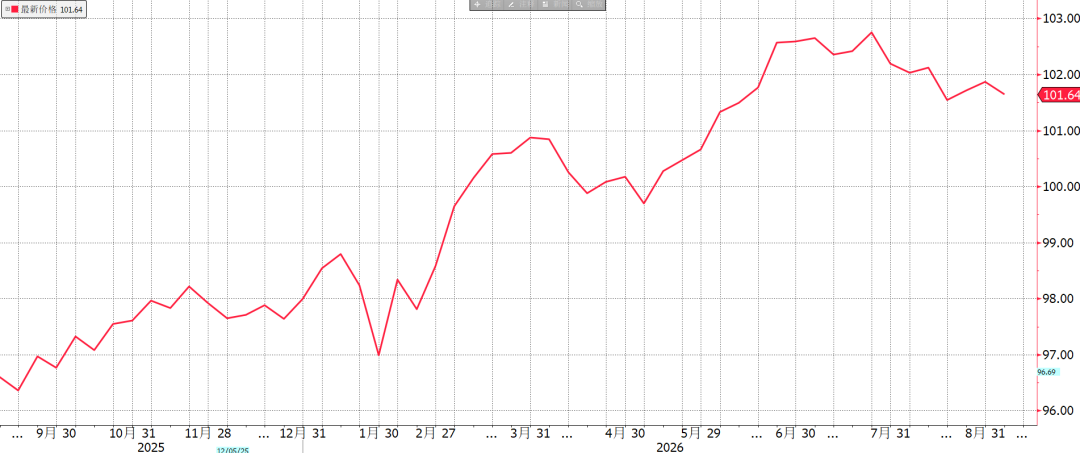
Chart: The CFETS index remains at a high level
From a fundamental perspective, China’s trade surplus exceeds that of Japan and South Korea, but domestic economic activity and interest rates remain low. The central parity rate is guiding the yuan to fluctuate at a reasonably balanced level, making it unlikely to appreciate as quickly as the yen and won in the short term.
3. Summary
(1) The collective appreciation of Asian currencies is a rapid correction of their previous undervaluation, returning to a reasonable level based on fundamentals.
(2) As the appreciation cycle for the yuan started earlier and lasted longer, it is lagging behind other Asian currencies this round. It may continue to appreciate at its own gradual pace in the future.
Disclaimer: The content of this article solely reflects the author's opinion and does not represent the platform in any capacity. This article is not intended to serve as a reference for making investment decisions.
You may also like
Uniqlo to launch KAWS UNIVERSE UT collection on Sept. 14, 2026
10-Yr Benchmark Govt Yields - U.S. vs Other Nations
2-Yr Benchmark Govt Yields - Germany vs Other Nations
2-Yr Benchmark Govt Yields - U.S. vs Other Nations
Crypto prices
More


