
Goldman Sachs Says: The Gold Bull Market Isn’t Over, $4,000 is a Buy-the-Dip Zone

FX168 Finance News, September 8—— When it comes to execution, Kim’s action plan is highly specific: take advantage of the volatility window created by this week’s macro data releases, and before the September FOMC meeting, buy in batches and hold whenever gold prices dip close to $4,000/oz.
Gold prices have retreated about 20% from this January’s all-time highs, and voices predicting a “bull market top” have surfaced in the market. However, Goldman Sachs disagrees with this judgment. Tony Kim, Global Head of Metals Trading at Goldman Sachs, said explicitly in Goldman’s official market podcast that the current pullback is just a “lengthy consolidation,” not the end of a bull market. His position is quite firm: Goldman Sachs remains bullish on gold, and recommends that investors see any pullback to the $4,000/oz area as an ideal region to accumulate long positions in batches. This view is underpinned by gold’s evident stabilization in August after a sharp slide, at a time when the market is on the eve of two major events: the soon-to-be-released US CPI data, and the September Federal Reserve FOMC meeting.
For the reasons behind this round of gold’s pullback, Kim offered two concrete explanations that overlapped and jointly weighed on prices. The first is policy uncertainty stemming from the Fed Chair transition. The policy inclinations of Fed Chair Walsh are unclear, and the market is still deciphering his “reaction function”—that is, faced with varying inflation data, whether the new Chair would lean towards a rate hike, cut, or keep rates unchanged. Combined with the Trump administration’s recent public comments on Fed policy, the entire interest rate pricing system is now in a state of flux, and non-yielding assets like gold have naturally borne the brunt. The second factor is the spillover of geopolitical shocks. The Iran-US conflict has disrupted the energy, agricultural, and metals markets, not only altering the market’s inflation expectations, but more importantly, interrupting the reserve capital flows from Asia that would have otherwise flowed into the precious metals market. Kim revealed that, affected by this, most institutional clients within Goldman’s ecosystem have already cut their gold positions—but among all these flows, only central bank buying has remained unshaken, which is the core foundation for Goldman’s confidence in declaring that “the bull market isn’t over.”
The foundation of the bull market: Central banks bought one-third of new supply
The basis for this judgment is a clear, quantifiable supply and demand logic. Kim pointed out that the world’s annual gold mine supply is around 3,500 tons, while central bank annual gold purchases have leaped from 400-500 tons before the Russia-Ukraine conflict (the incident of Russian foreign reserves being frozen is a clear dividing line) to the current 1,000-1,100 tons—a more than twofold increase. In other words, central banks alone are now absorbing nearly a third of annual newly mined gold, leaving much less incremental supply for jewelry consumption, gold ETFs, and physical investment. This pattern leads to a crucial conclusion: with less available new supply for market allocation, it now takes considerably less new investment capital to sharply push gold prices higher. As long as this structural central bank buying force does not reverse, the bull market’s foundation remains solid.
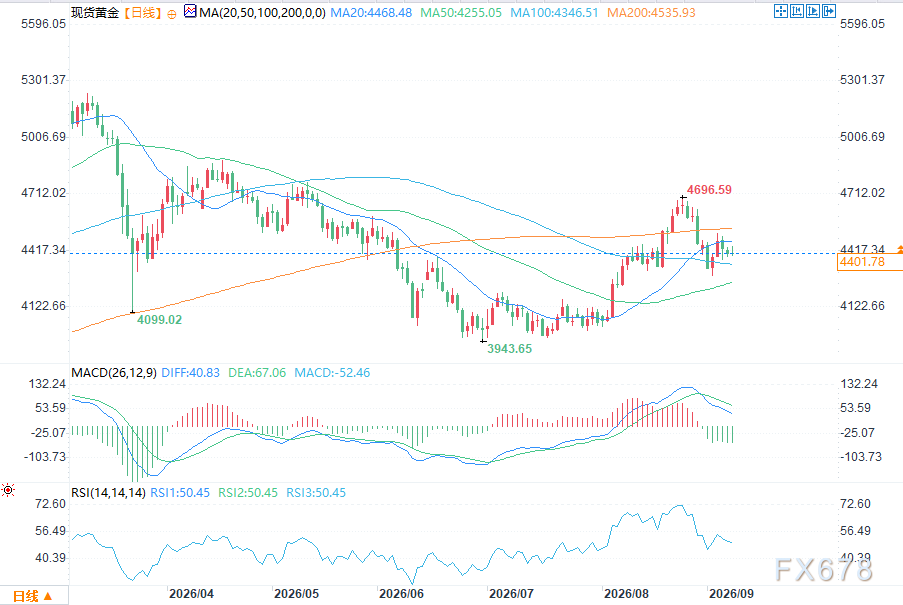
(Spot gold daily chart, Source: EasyFX168)
However, Kim also frankly pointed out the weak link in this round of movements—Asia’s physical demand. Asia has historically been a dual pillar for both jewelry consumption and central bank gold purchases, but this year’s performance is clearly weak. The reason lies with the Iran-US conflict derailing the region’s accumulation of foreign reserves from trade surpluses. Countries such as India are prioritizing valuable foreign reserves for defending local currency exchange rates and ensuring energy imports, leaving no bandwidth to increase gold holdings; notably, India has also rolled out policies to actively restrict gold consumption domestically. In Kim’s view, whether these capital flows can sustainably return depends on whether the Middle East energy market normalizes for a considerable period; in the short term, it’s unrealistic to expect this to be a new growth driver.
Compared to gold, Kim’s remarks on silver were much more cautious—he is in fact warning clients not to confuse the two. In the silver market, investment demand accounts for only about one-fifth of total demand, with the rest coming mainly from industrial uses. Moreover, global central banks do not systematically accumulate silver the way they do with gold. This means silver’s price discovery mechanism depends far more on retail investor sentiment, physical premiums, and speculative flows, making its price equilibrium range astonishingly wide—Kim’s assessment is that, depending on capital flows, silver’s clearing price could land anywhere between $50 to $100/oz. In his logic: gold is a fundamentally driven trade, while silver is more like a high-beta, retail-driven lottery ticket—their market roles are fundamentally different.
Disclaimer: The content of this article solely reflects the author's opinion and does not represent the platform in any capacity. This article is not intended to serve as a reference for making investment decisions.
You may also like
Golden Cross Signals a Potential Bull Run: 5 Altcoins That Could Outperform If Crypto Turns Higher

SpaceX (SPCX.US) stock price consolidates awaiting breakout: Nasdaq 100 rebalancing imminent, $15.5 billion in buy orders poised to surge
SpaceX's stock has recently been trading within a narrow range, but a new wave of buying interest may arrive soon.

XRP wallets holding 1 million or more classified as ‘Whale Territory’ in updated rankings
Crypto prices
More


