

Ethereum exchange-traded funds (ETFs) recorded significant net inflows of 10,330 ETH on September 4, 2026, according to data from SoSoValue. This influx follows a volatile week in the crypto market, signaling renewed institutional interest in Ethereum-based products and helping to stabilize U.S.-listed ETF holdings after a period of outflows.
Ethereum ETFs see 10,330 ETH net inflows, BlackRock leads with 29,600 ETH
By:Cointurk
Bitget offers one-stop trading for cryptocurrencies, stocks, and gold. Trade now!
A welcome pack worth 6200 USDT for new users! Sign up now!
BlackRock dominates Ethereum ETF activity
BlackRock’s Ethereum ETF, under the ticker ETHA, outperformed all other funds by adding 29,600 ETH in net inflows. The product specifically saw 23,060 ETH added on the day, securing BlackRock’s strong foothold in the expanding Ethereum ETF sector. Other prominent issuers also reported increased demand, but BlackRock’s numbers positioned it as a clear leader among institutional investors.
Bitwise’s ETHB followed, registering a net inflow of 6,540 ETH. The positive inflow across various funds suggests that interest is not limited to a single product, but rather points to broader confidence in Ethereum-based investment vehicles. Fidelity’s FETH, by contrast, saw outflows totaling 19,270 ETH, possibly reflecting a preference shift among investors rather than a retreat from Ethereum ETFs as a whole.
Ethereum ETFs in the U.S. recorded a total net inflow of 10,330 ETH, led by BlackRock with 29,600 ETH, while Bitwise attracted 6,540 ETH and Fidelity saw withdrawals of 19,270 ETH, according to SoSoValue data.
ETF flows and institutional sentiment
Institutional sentiment towards Ethereum is often gauged by monitoring ETF flow patterns. Elevated inflows can enhance liquidity, reinforce spot market depth, and affect the underlying staking dynamics for Ethereum. These ETF investments influence exchanges, market-makers, and custodians tasked with managing fund creation and redemption mechanisms.
Analysts are closely watching whether this influx momentum will persist, especially as new macroeconomic data including upcoming CPI releases may impact capital allocation strategies. Additional factors such as expanded ETH ETF options markets and the rollout of Ethereum’s Dencun upgrade, which is expected to drive staking adoption, will likely play a role in shaping institutional participation.
In an environment where the impact of a single Federal Reserve decision or the sudden listing of a new altcoin can immediately upend market conditions, many traders are rethinking their toolkit. Using multiple apps for charting, news, and portfolio monitoring often results in reduced efficiency. Now, a growing number of privacy-focused investors are turning to platforms like CryptoAppsy, which offer real-time charts, price s, coin-specific updates, and macroeconomic data in a unified interface, even without requiring an account.
Macroeconomic backdrop and regulatory uncertainty
The current uptick in fund flows occurs against a backdrop of macroeconomic uncertainty and regulatory ambiguity surrounding staking use in ETFs. No final clarification has come from the Securities and Exchange Commission, but the ongoing institutional adoption of crypto-backed investment products continues to bolster both Ethereum and Bitcoin.
If Ethereum ETFs continue to attract increased institutional capital, and market instruments such as ETH options see wider use, some observers anticipate a further acceleration of Ethereum adoption in the coming quarters following ongoing network upgrades.
ETF flows are shaping Ethereum’s market liquidity and influencing the role of major funds and custodians, especially as regulatory signals and product innovations continue to evolve.
0
0
Disclaimer: The content of this article solely reflects the author's opinion and does not represent the platform in any capacity. This article is not intended to serve as a reference for making investment decisions.
Understand the market, then trade.
Bitget offers one-stop trading for cryptocurrencies, stocks, and gold.
Trade now!
You may also like
New Zealand Dollar struggles to gain traction as cautious RBNZ outlook weighs
FXStreet•2026/09/07 16:12
$200B Hanwha builds tokenized securities platform on Avalanche as AVAX climbs
Cryptopolitan•2026/09/07 16:09
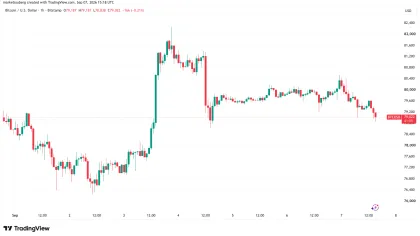
Bitcoin chips away at weekend upside as $80K hangs in the balance
Cointelegraph•2026/09/07 16:06
Korea’s tax service: report overseas crypto accounts even after the exchange fails
Cryptopolitan•2026/09/07 16:03
Crypto prices
More
Bitcoin
BTC
$78,875.78
-1.02%

Ethereum
ETH
$2,474.92
-0.31%

Tether USDt
USDT
$0.9998
-0.02%

BNB
BNB
$736.77
-1.25%

XRP
XRP
$1.39
-1.62%

USDC
USDC
$0.9998
-0.01%

Solana
SOL
$103.54
-2.14%

TRON
TRX
$0.3340
-0.41%

Hyperliquid
HYPE
$85.56
-3.09%

Zcash
ZEC
$1,152.59
-1.92%
How to buy BTC
Bitget lists BTC – Buy or sell BTC quickly on Bitget!
Trade now
Become a trader now?A welcome pack worth 6200 USDT for new users!
Sign up now