
U.S. Nonfarm Payrolls Exceed Expectations and Pressure Gold Prices; Mid-term Bullish Structure for Gold Remains Valid, Awaiting Stabilization

International gold price slightly weakened during early Asian trading on Monday,
For gold, US interest rate expectations are currently one of the most important pricing factors. Gold itself does not generate interest income; when the market expects US interest rates to remain high or even rise further, the opportunity cost of holding gold versus dollar assets increases. Therefore, after the nonfarm data was released, investors quickly increased their bets on the Fed tightening policy at its September meeting, leading to short-term profit-taking and capital outflows from gold.
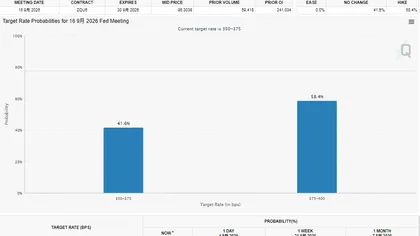
The probability of a 25 basis point rate hike at the September Fed meeting has risen to about 58.3%, up from roughly 50.2% before the data release. The change in market expectations is directly reflected in precious metal prices. Independent analyst Tai Wang believes that the strong employment report has significantly increased the likelihood of a rate hike in September; unless the upcoming US consumer price index data is weak, gold is likely to remain under pressure in the short-term.
However, the market cannot yet determine the Fed’s future policy path based solely on a single employment report. This week, the US PPI and CPI will become new key variables. If producer and consumer prices accelerate again, the market may further bet on the Fed maintaining or even strengthening its tightening stance, supporting the dollar and US Treasury yields and potentially prompting further gold price adjustments.
Conversely, if US inflation data is below expectations, especially if core prices continue to cool, the rate hike bets induced by the employment data may be reversed. At that point, the market will reassess whether the Fed really needs to act more aggressively in September. Therefore, the current decline around $4,395 is more of a short-term adjustment following the repricing of rate expectations rather than a fundamental change in the long-term bullish logic for gold.
Meanwhile, rising risks to Middle East energy transport have further increased the complexity of gold’s trajectory. Regional tensions have remained elevated recently, with commercial shipping through the Strait of Hormuz drawing significant market attention. If energy transportation continues to be affected, international oil prices may stay high and transmit energy costs into global inflation. Typically, escalating geopolitical risks can support gold through safe-haven demand. However, there is a special circumstance now: if energy prices keep rising and trigger renewed market concerns about US inflation, it will be more difficult for the Fed to quickly shift to a dovish policy stance. As a result, the safe-haven benefit for gold from elevated geopolitical risks may partially be offset by the adverse chain of “rising oil prices → heightened inflation expectations → sustained high rates.”
This is an important reason for recent gold price performance deviating from traditional safe-haven logic. Investors are not only focused on military risk itself but are more concerned about whether these risks will further impact energy supply, inflation, and the policy path of major central banks. If oil prices continue to rise but US inflation data weakens at the same time, gold may regain dual support from safe-haven and easing expectations; however, if rising oil prices push US inflation higher again, gold may remain under short-term pressure.
From a capital perspective, after a significant rally, gold has accumulated substantial profits, and the better-than-expected nonfarm data served as a key trigger for profit-taking. As long as Fed policy expectations have not fully stabilized, gold may remain volatile. The market now needs to closely watch whether the $4,395-$4,405 region can provide effective support, and if prices recover, whether they can reclaim the area around $4,465.
Previously, Commerzbank believed that the latest gold rebound was marked by increasing market divergence, with some investors starting to doubt whether the Fed would really tighten policy further in September. Earlier, the Fed’s Christopher Waller had also taken a more cautious policy stance, prompting the market to reevaluate the likelihood of further rate hikes. This means that there is currently no one-sided bearish logic in the gold market, and subsequent movement will depend closely on US inflation data and statements from Fed officials.
From a global asset allocation perspective, gold still holds certain strategic value. On the one hand, global geopolitical risks and energy supply uncertainties have not disappeared; on the other, there remains disagreement in the market over the long-term outlook for US fiscal policy, interest rates, and the dollar. Even if gold is pressured by strong US employment data in the short-term, as long as long-term capital does not clearly exit, pullbacks may still attract new dip buying.
From the 4-hour perspective, gold remains in a weak structure after the pullback, with $4,395 being an important battleground between bulls and bears. If prices find buying support near $4,400 and break back above the $4,435–$4,465 area, 4-hour momentum may gradually recover with rebound targets near $4,500. Conversely, if prices stay below $4,465 and break below $4,395, short-term bears may maintain control, making $4,350 the next key level to watch. Short-term indicators such as MACD should be monitored for bottoming signals; whether $4,395 holds will directly determine if gold’s short-term adjustment is a normal retracement or a sign of further weakening.
Editor’s Summary
The US nonfarm data for August greatly exceeded expectations, significantly raising expectations of a Fed rate hike in September, which is the main reason for gold’s rapid pullback this round. In the short-term, the dollar and rate expectations may continue to suppress gold prices, and the inflation risks brought by rising energy prices also increase market uncertainty. However, it is not yet sufficient to conclude that the mid-term bullish structure for gold has ended. The $4,395–$4,350 region currently forms a significant support zone; as long as this area absorbs selling effectively, there remains a possibility for gold to recover to the upside. Ultimately, the true directional key will be whether US PPI and CPI validate market expectations for further Fed tightening. If US inflation re-heats, gold may continue to look for support at $4,350 or even $4,260; if inflation data cools clearly and the Fed weakens further rate hike expectations, gold may retest $4,465 and aim for $4,675. The core contradiction in the gold market has shifted from pure safe-haven demand to a rebalancing between “geopolitical risk support” and “high rates, strong dollar pressure.” As such, short-term volatility may increase further, but in the medium and long term, attention should continue to focus on real interest rates, dollar trends, central bank gold buying, and changes in global risk asset allocation.
Editor: Zhu Henan
Disclaimer: The content of this article solely reflects the author's opinion and does not represent the platform in any capacity. This article is not intended to serve as a reference for making investment decisions.
You may also like
Liquid Network Pauses After Purported $320M White-Hat Bitcoin Withdrawal
Zcash ETF inflows surge as privacy coins outperform Bitcoin and wider crypto sector
Bittensor targets $300 as TAO extends five-day rally

Crypto prices
More


