- Glassnode and ARK Invest published joint report on September 2, 2026 comparing BTC, ETH, and SOL across six decentralization dimensions
- Bitcoin ranked highest overall on decentralization; Solana strongest on throughput resilience but weakest on ownership distribution
- Full-node hardware costs: Bitcoin ~$289, Ethereum ~$730, Solana validator-class ~$21,478
- 3 entities crossed block-production threshold for BTC and ETH; Solana required 19 validators to exceed 33% stake threshold
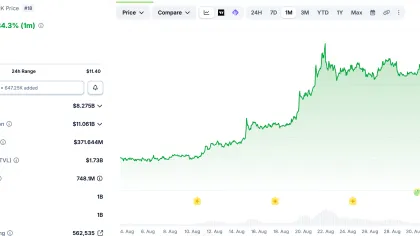
- SOL trading at $98.11, down 4.28% in 24 hours at time of writing — no direct price reaction tied to the report
Glassnode and ARK Invest Release Blockchain Trilemma Comparison Report
Research firm Glassnode and asset manager ARK Invest have jointly published a report titled The Decentralization Spectrum: Design Tradeoffs in Digital Assets, released on September 2, 2026. The report applies the blockchain trilemma framework — the principle that a network can typically optimize for only two of decentralization, security, and scalability at a time — to evaluate Bitcoin, Ethereum, and Solana across measurable criteria.
Six Dimensions Used to Evaluate Each Network
Rather than treating decentralization as a binary characteristic, the report frames it as a spectrum shaped by deliberate design decisions. The analysis covers six measurable dimensions: ownership distribution, exit fluidity, verification costs, critical resilience, reconstruction costs, and infrastructure distribution.
According to the report’s findings:
- Bitcoin ranked highest overall on the decentralization spectrum across the six dimensions measured.
- Ethereum placed in the middle, balancing multiple tradeoffs across the measured categories.
- Solana demonstrated the strongest performance on throughput-oriented resilience but scored lower on ownership distribution and verification accessibility.
Block Production Thresholds and Validator Counts
The report identified that three entities each crossed the block-production concentration threshold for both Bitcoin and Ethereum. For Solana, the analysis found that 19 validators were needed to collectively exceed the 33% stake threshold used in the study — a figure the report presents as a structural data point, not a value judgment.
Full-Node Hardware Cost Comparison
One of the more concrete data points in the report concerns the estimated cost of running a full node or validator-equivalent setup on each network:
- Bitcoin full node: approximately $289
- Ethereum full node: approximately $730
- Solana RPC node or validator-class setup: approximately $21,478
These figures reflect hardware cost estimates as presented in the report and represent one factor in the broader verification accessibility dimension of the analysis. The disparity in costs is cited as a contributing factor to differences in node participation rates across the three networks.
Core Takeaway from the Report
The report’s central argument is that decentralization should not be evaluated as an on/off characteristic. Instead, each network’s design choices position it differently along a spectrum, and the blockchain trilemma remains a valid analytical lens for comparing those positions. No single network is presented as superior across all dimensions.
Current Market Context
At the time of writing, Solana (SOL) is trading at $98.11, down 4.28% over the past 24 hours. No direct price movement has been attributed to the report’s publication. Bitcoin and Ethereum market data was not included in the available price feed at time of writing.
{"@context": "https://schema.org", "@type": "NewsArticle", "headline": "Glassnode & ARK Invest Joint Report Ranks BTC, ETH, SOL on Blockchain Trilemma", "description": "Glassnode and ARK Invest published a joint report measuring Bitcoin, Ethereum, and Solana across six decentralization dimensions including cost, security, and scalability.", "image": [], "author": {"@type": "Organization", "name": "CoinsProbe Markets Desk"}, "publisher": {"@type": "Organization", "name": "CoinsProbe", "logo": {"@type": "ImageObject"}}, "datePublished": "2026-09-02T10:37:39.318300Z", "dateModified": "2026-09-02T10:37:39.318300Z", "isAccessibleForFree": true, "inLanguage": "en-US", "articleSection": "Crypto Markets", "keywords": "cryptocurrency, crypto news, bitcoin, ethereum, live feed"}CoinsProbe may publish sponsored articles, affiliate links, or promotional collaborations. All sponsored material is clearly labeled to maintain transparency with our audience. Our editorial decisions remain fully independent, and advertising partnerships do not influence reviews, rankings, or published opinions.
Since 2023, CoinsProbe has delivered reliable insights on cryptocurrency, blockchain, and digital assets. Our content is created by experienced researchers and analysts who follow strict editorial standards focused on accuracy, transparency, and credibility. Every article is carefully reviewed and verified using trusted sources and current market data. We provide unbiased analysis and timely updates covering everything from emerging crypto projects to major industry developments.