
Pundit Says Listen Up XRP Holders, Here’s Why This Matters More Than Ever

Criticism of Ripple’s XRP escrow has long centered on claims that it reflects centralized control over the cryptocurrency’s supply.
However, crypto commentator X Finance Bull contends that the same feature critics often point to may instead represent one of XRP’s strongest advantages, particularly as institutions and governments continue exploring blockchain-based financial infrastructure.
According to X Finance Bull, Ripple’s decision in December 2017 to lock 55 billion XRP into time-locked escrow contracts established a system governed by the XRP Ledger itself rather than by company discretion. The commentator emphasized that these contracts are enforced through the ledger’s consensus mechanism instead of relying on promises from Ripple or its executives.
Nine Years of Predictable Supply Management
The post explained that the escrow mechanism releases up to one billion XRP each month. Ripple can access a portion of the released tokens, while any unused amount is automatically placed back into escrow. X Finance Bull stressed that this process has remained consistent for nearly nine years, with every transaction publicly visible on-chain.
Based on this record, the commentator stated that the escrow demonstrates disciplined and transparent supply management rather than centralized authority. X Finance Bull stated that no executive has been able to alter the release schedule outside the protocol’s established rules, presenting the system as a long-running example of cryptographic enforcement instead of corporate intervention.
The post suggested that this operational history distinguishes XRP from many other digital assets, particularly because the mechanism has functioned without deviation over an extended period.
Government and Institutional Applications
X Finance Bull went on to argue that the significance of the escrow extends beyond Ripple’s XRP holdings. According to the commentator, the same infrastructure could support governments and major institutions seeking to secure digital reserves under predetermined cryptographic conditions.
The post further highlighted the introduction of XLS-85 in early 2026, stating that the amendment expanded the XRP Ledger’s native escrow functionality to all tokens issued on the network. As described by X Finance Bull, this includes assets such as Ripple USD (RLUSD) and tokenized real-world assets, allowing them to benefit from the same escrow framework previously used for XRP.
The commentator clarified that this development transforms the escrow from a mechanism associated primarily with Ripple’s token supply into infrastructure that could underpin institutional and sovereign digital asset management.
In conclusion, X Finance Bull asserted that what critics have historically viewed as XRP’s greatest weakness may instead serve as one of its strongest institutional credentials.
The commentator maintained that the escrow system represents a settlement framework that has been tested for nearly a decade, suggesting that financial institutions may value its transparency, consistency, and cryptographic certainty as digital asset adoption continues to expand.
Disclaimer: The content of this article solely reflects the author's opinion and does not represent the platform in any capacity. This article is not intended to serve as a reference for making investment decisions.
You may also like
Negative Comments About Bitcoin Have Reached Record Levels: What Does This Mean?
Crypto Futures Liquidations Surpass $101 Million in One Hour as Market Volatility Spikes
Bitcoin World Live Feed Adjusts Weekend Hours: What Traders Need to Know
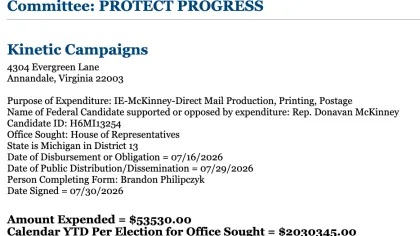
Crypto PAC pours another $1M into Michigan House race
Crypto prices
More


