
Non-U.S. Currencies Rise, but Only the Yen Struggles to Strengthen?

Morning FX
The U.S. Index—when one whale falls, non-U.S. currencies thrive. However, while the euro, the Australian dollar, and the yuan have made notable gains, the yen remains unmoved at high levels, as if in deep meditation, seemingly unaffected by the turmoil in global forex markets.
1. In what aspects does JPY’s weakness manifest?
It’s evident in every way.
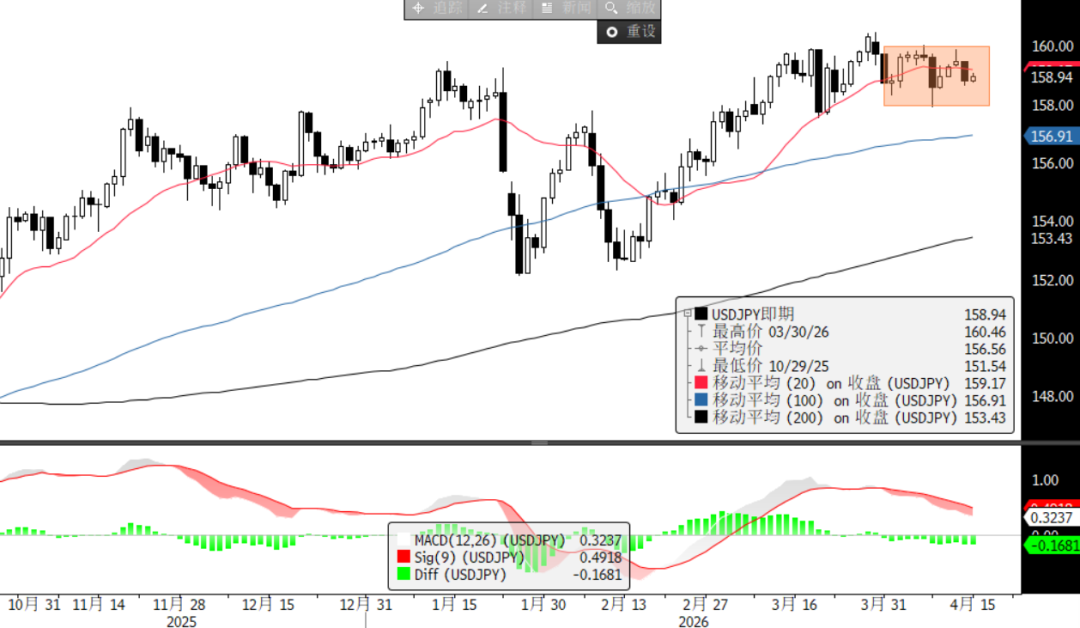
First, spot: After favorable news emerged from the US-Iran negotiations, EUR, AUD, GBP all posted gains of about 300 points, while USDJPY managed only a movement of 150 pips at most—hardly anything remarkable.
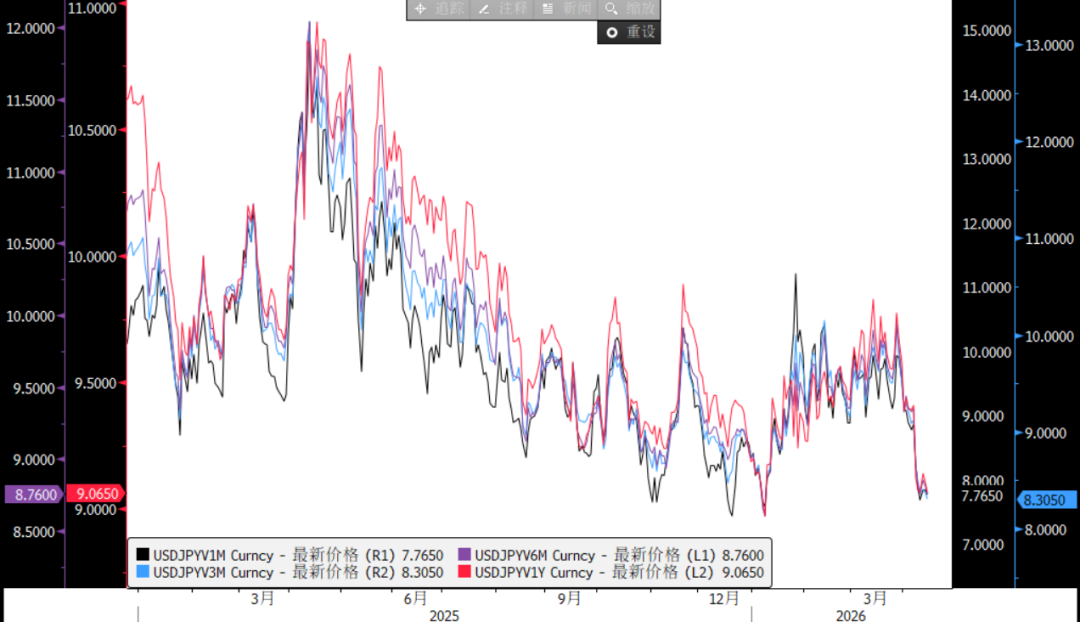
Next, options: The volatility curve for USDJPY within 1Y has dropped to lows not seen since July 2024. What does this mean? Before July 2024, the U.S.-Japan interest rate spread was high and carry trade activity was at its peak. Now, the spread has narrowed by more than 240bp compared to then, but the spot position and volatility are nearly identical to those levels.
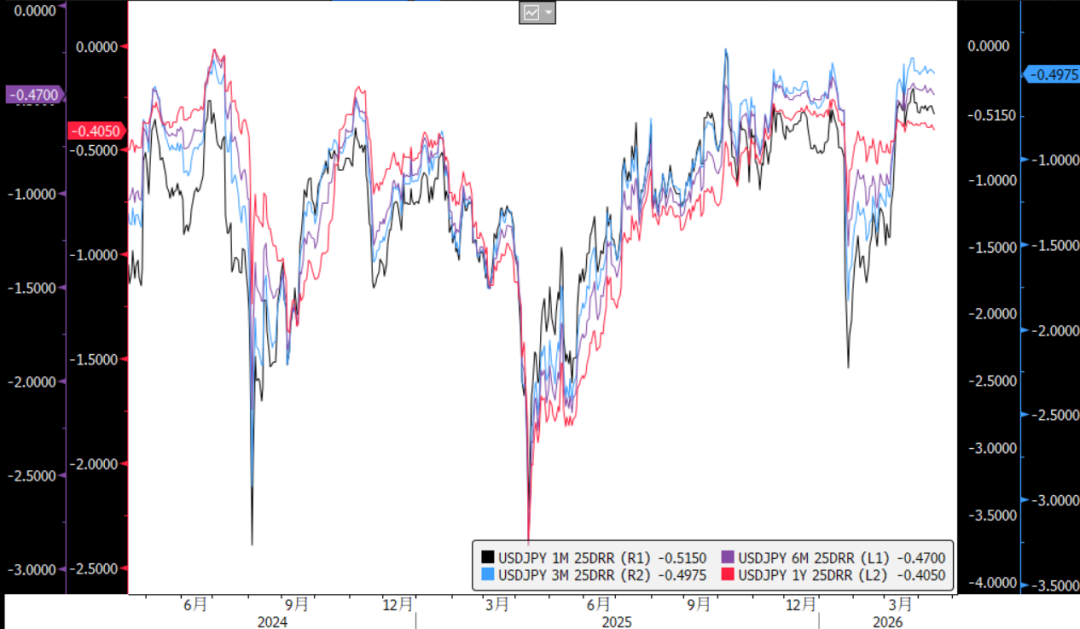
USDJPY RR has also reached its highest level since 2024; the options market simply does not believe the yen has any room for appreciation.
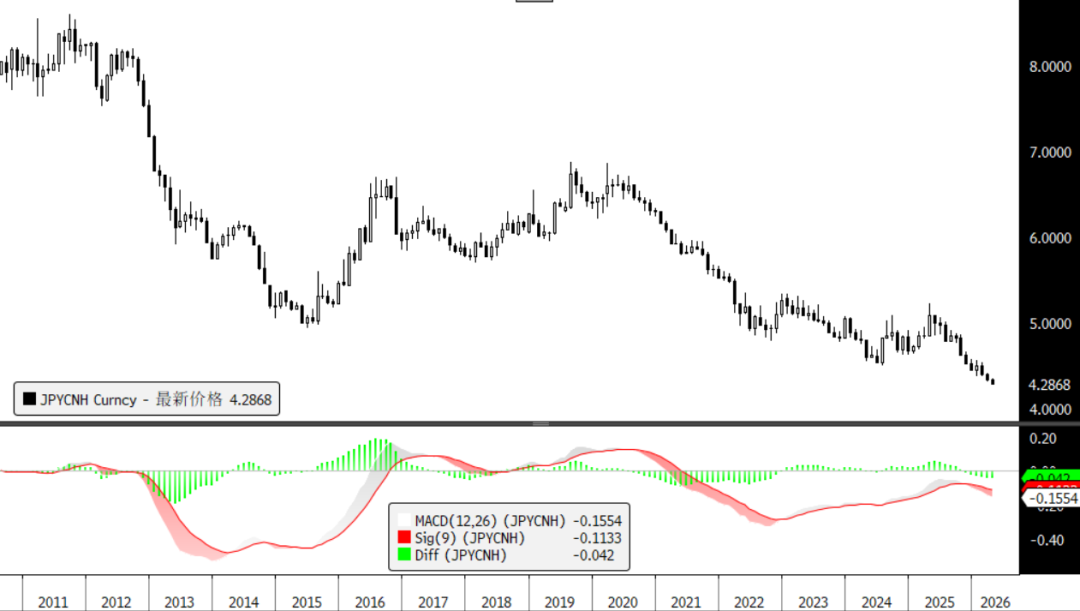
Finally, cross pairs: Even if USDJPY doesn’t hit new highs, yen crosses do. Pairs like EURJPY and AUDJPY have recently hit new highs unseen in the 21st century. CNYJPY keeps setting historical records, which is certainly a blessing for companies and individuals with yen purchase needs.
2. What are the sources of JPY’s weakness?
(1) Fundamentals: With US-Iran negotiations ongoing but the Strait of Hormuz closed, JPY—a safe haven currency and a country highly reliant on oil imports—is hurting the most, enduring a “double kill” of heightened risk sentiment and high oil prices. Meanwhile, elevated oil prices are dampening expectations for further rate cuts by Western central banks, and Europe is even preparing to fast-track rate hikes. Thus, JPY can no longer enjoy the monetary policy convergence advantage it did in previous years.
(2) Intervention: Although USDJPY didn’t break above 160, yen crosses continue to hit new highs, and the MOF could intervene—or at least threaten to do so verbally. However, the Japanese government has been silent lately, showing no intention to intervene. Perhaps they realize that with Japan’s current fundamentals, intervention is nothing more than handing out money and providing opportunities for the market to short the yen; merely treating the symptom but not the cause.
(3) Carry trade: As mentioned above, declining volatility has made USDJPY’s carry/vol more attractive, allowing carry traders to further increase their JPY short positions.
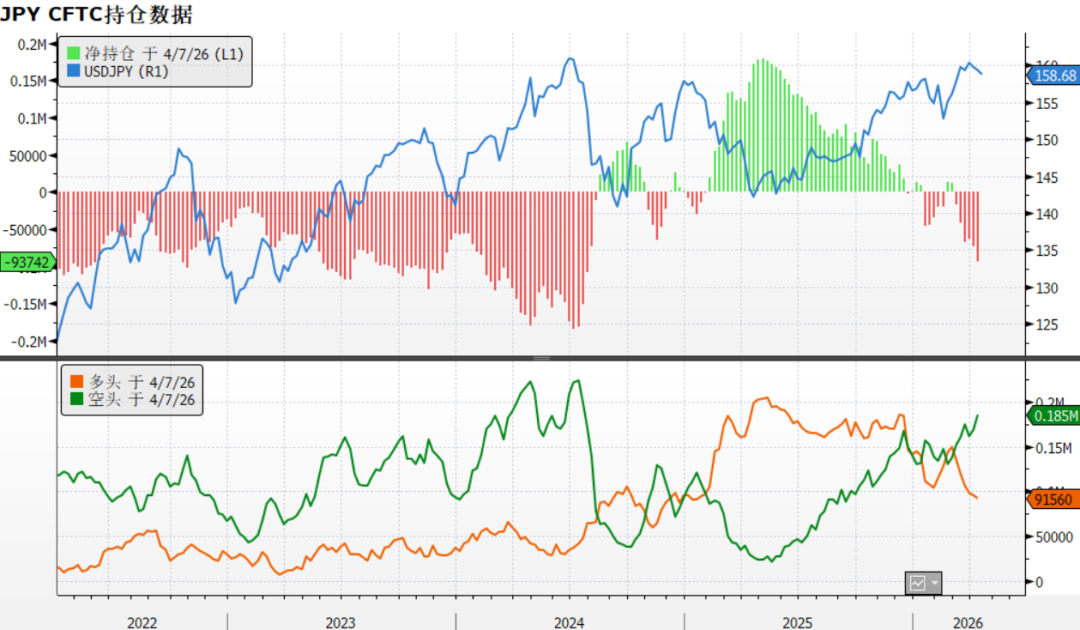
3. What to trade in JPY?
(1) Bet on appreciation: With USDJPY RR and spot both high, and the 160-162 zone being a high-risk intervention area, try rolling short-term sell RR trades and hope for an intervention/BOJ rate hike/recession squeeze.
(2) Earn carry (bold version): Personally, I prefer to go long on AUDJPY, which has the thickest carry and the best upward spot trend. However, AUDUSD is at a relatively high level, so any pullback would provide a better opportunity to add positions.
(3) Or simply do nothing. Isn’t it better to spend your time studying currencies other than JPY?
Disclaimer: The content of this article solely reflects the author's opinion and does not represent the platform in any capacity. This article is not intended to serve as a reference for making investment decisions.
You may also like
Markets Brace for a Volatile Week as U.S. Data Drops: 5 Altcoins That Could Rally if Momentum Returns

ECB Presidential Contest Centers on Crisis Management: French Debt Risk Becomes the Touchstone
The competition for the position of President of the European Central Bank is increasingly centered on a key question: which candidate is best equipped to deal with the "vigilantes" of the bond market? As France's debt issues revive memories of turmoil in the Eurozone and the current president, Christine Lagarde, prepares to step down early, Dutchman Klaas Knot and Spaniard Pablo Hernández de Cos may soon take over amid financial turbulence.

Peter Schiff’s ‘$75K Bitcoin call’ meets a vital week: Fed, inflation, and ETF outflows loom

Deutsche Bank, which "accurately called the top" two weeks ago: Tech stocks need to "fall another 5%" to reach the "long-term trend bottom"
After Deutsche Bank downgraded its rating on US tech and large-cap growth stocks two weeks ago, tech stocks have underperformed the rest of the S&P 500 components by 12 percentage points. However, Deutsche Bank noted that tech stocks still have about 5 percentage points of downside before reaching the bottom of their long-term trend channel. Institutional positions have been quickly cooling, and signs of outflows from the $30 billion bottom-fishing funds are beginning to appear. Going forward, earnings performance, capital flows, and external risks will determine whether the adjustment stops at structural rotation.
Crypto prices
More


