
Trust Wallet adds real-time scam address checks for crypto users

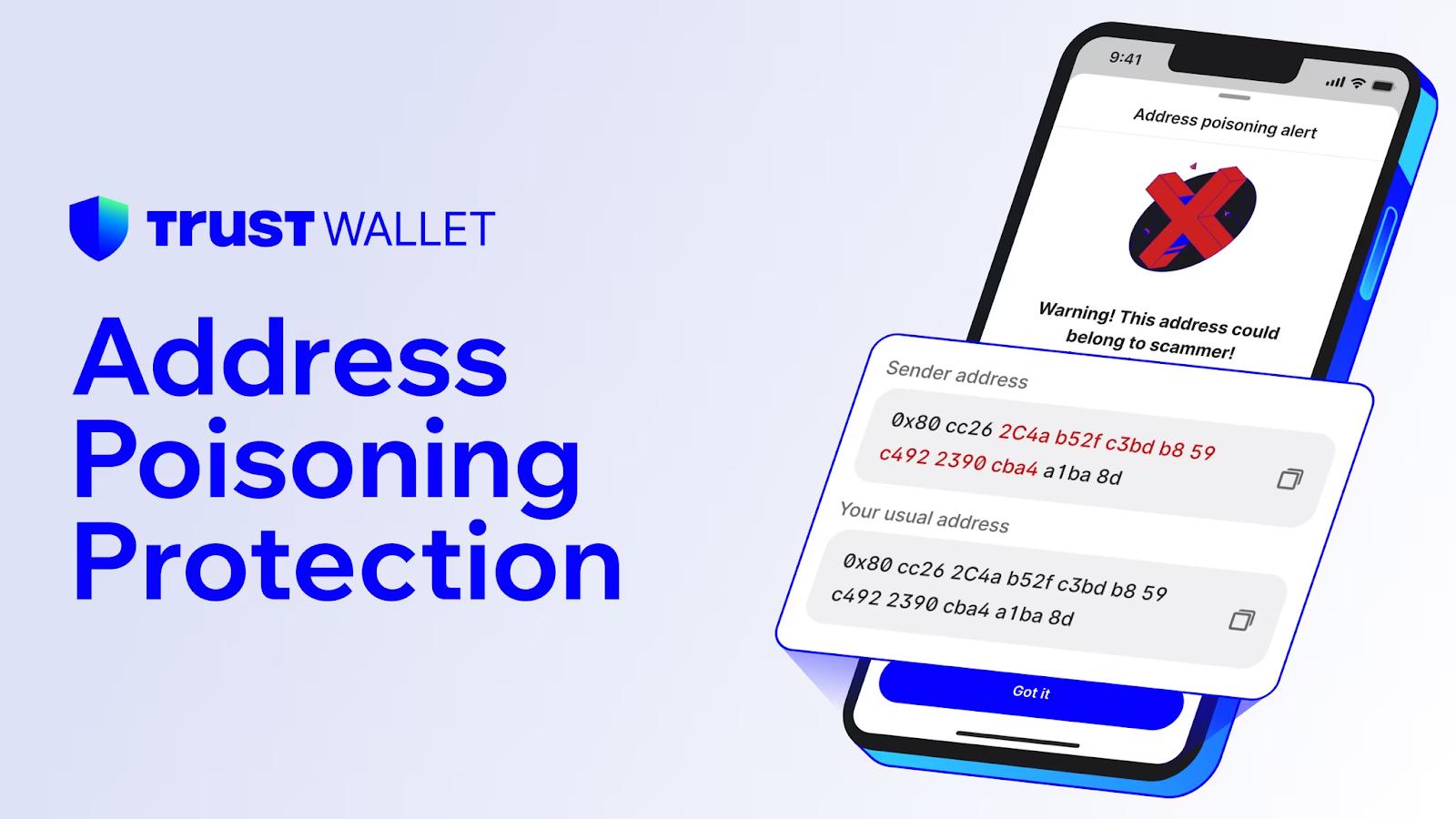
Trust Wallet has introduced address-poisoning protection, adding a new screening feature designed to help users avoid sending cryptocurrency to scam wallets that mimic legitimate addresses.
The noncustodial wallet provider said Tuesday that the new feature will automatically run a destination address check against a database of known scam and lookalike addresses to prevent malicious transactions. The rollout initially covers 32 Ethereum Virtual Machine-compatible blockchains, including Ethereum, BNB Smart Chain, Polygon, Optimism, Arbitrum, Avalanche and Base.
Trust Wallet called address poisoning attacks one of the “fastest-growing threats in crypto,” and claimed there have been over 225 million attacks and $500 million in confirmed losses to date.
Address poisoning is a form of phishing in which scammers trick victims into sending crypto to illicit wallets by first sending them small transactions, hoping that unsuspecting investors copy and paste the attacker’s address from their history.
Address poisoning losses keep rising
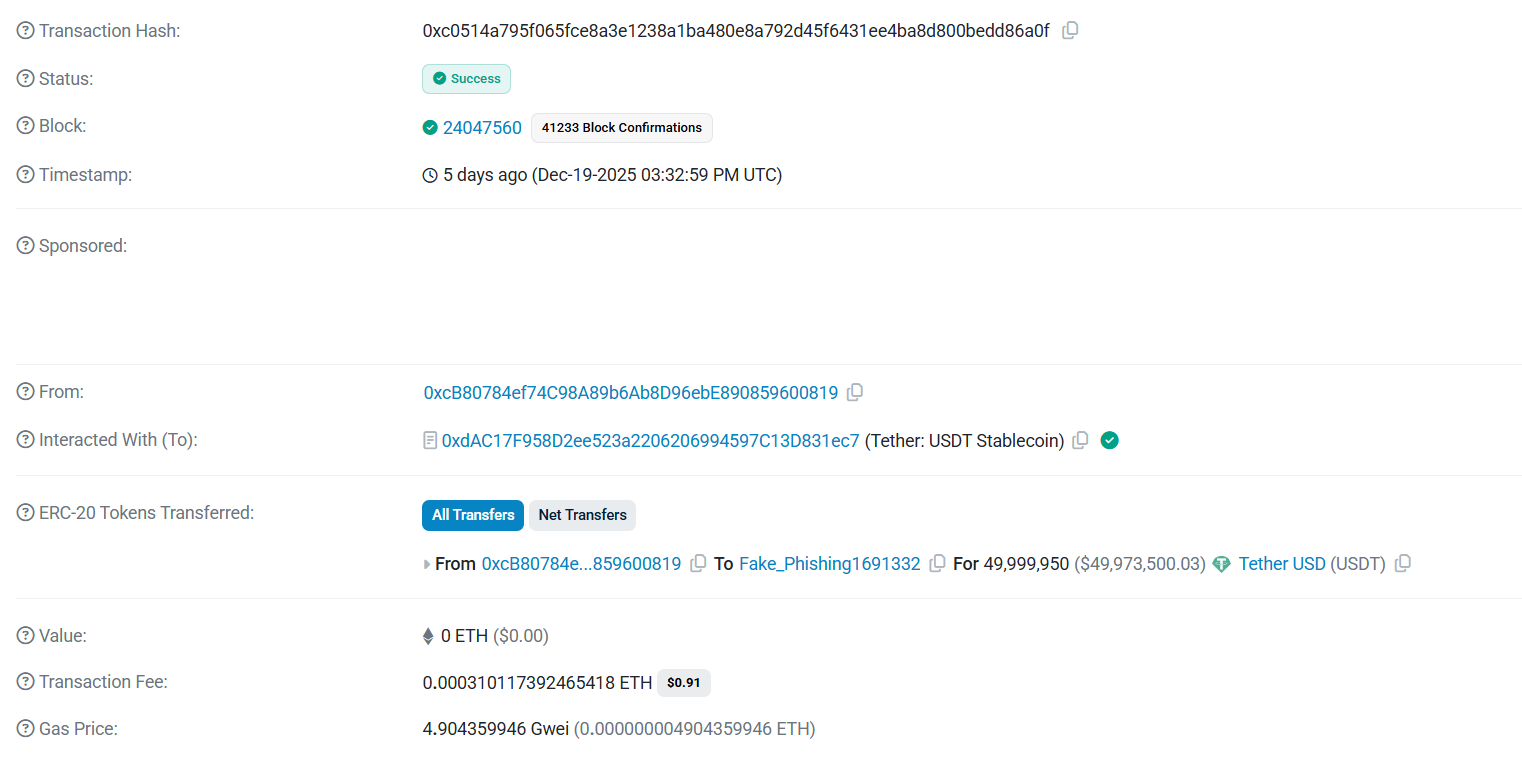
Address poisoning attacks recently cost two investors $62 million in cryptocurrency. One of the victims lost $50 million in USDt (USDT) in December 2025, prompting industry leaders to call on wallets to implement better security measures.
Related: Phantom Chat under scrutiny after $264K address poisoning loss
“All wallets should simply check if a receiving address is a poison address,’ and block the user. This is a blockchain query,” former Binance CEO Changpeng Zhao wrote in a Binance Square blog post on Dec. 24, 2025, adding that wallets shouldn’t display similar spam transactions in the first place.
Beyond spam transaction filtering, cryptocurrency investors need to stop copying wallet addresses from their transaction history, security firm Hacken’s Extractor team recently told Cointelegraph.
Other wallets that offer preemptive transaction filtering tools against malicious transactions include the Rabby Wallet, Zengo Wallet and Phantom Wallet.
Related: French couple forced to hand over $1M in Bitcoin by criminals posing as police
Trust Wallet’s Chrome browser extension was compromised on Dec. 24, 2025, resulting in around $7 million in losses for users. Trust Wallet released a new version of its wallet, which removed the malicious code, and said that user losses will be covered.
Magazine: Meet the onchain crypto detectives fighting crime better than the cops
Disclaimer: The content of this article solely reflects the author's opinion and does not represent the platform in any capacity. This article is not intended to serve as a reference for making investment decisions.
You may also like
UBS Trading Desk: Last Week’s US Stock Market Performance Resembled the Time of the ‘AI Stock Guru Liquidation’
UBS Trading Desk believes that US equities last week experienced "deleveraging rather than derisking"—AI and momentum sectors faced targeted sell-offs, with storage dropping 16% in a single week. Funds shifted to defensive and value sectors, but overall risk exposure was not systematically abandoned. Hedge funds' total exposure remains at the high 90th percentile, and risks of further deleveraging persist. The so-called "AI stock guru liquidation" at the time was also a result of crowded positions being forced to close, rather than a fundamental-driven systemic sell-off.

Euro attracts some sellers to near 1.1200 on French political turmoil, fiscal risks

USDC faces bank-rate pressure – Can Visa’s payments push offset it?

U.S. copper tariffs remain pending, traders grow increasingly cautious of copper bull market
Due to unclear signs regarding tariffs, traders remain cautious about the copper bull market.

Crypto prices
More


