
Mt. Gox transfers $3.2 billion in Bitcoin with $150 million to Bitstamp
Key Takeaways
- Mt Gox moved around $3.2 billion in Bitcoin on Tuesday.
- The transfer is part of a $9 billion repayment plan to creditors.
A wallet linked to the now-defunct crypto exchange Mt. Gox transferred $3.2 billion worth of Bitcoin early Tuesday, including 42,587 Bitcoin (BTC), valued at $2.8 billion, to an unidentified address, and almost $150 million in Bitcoin to Bitstamp’s wallet, according to data from Arkham Intelligence.
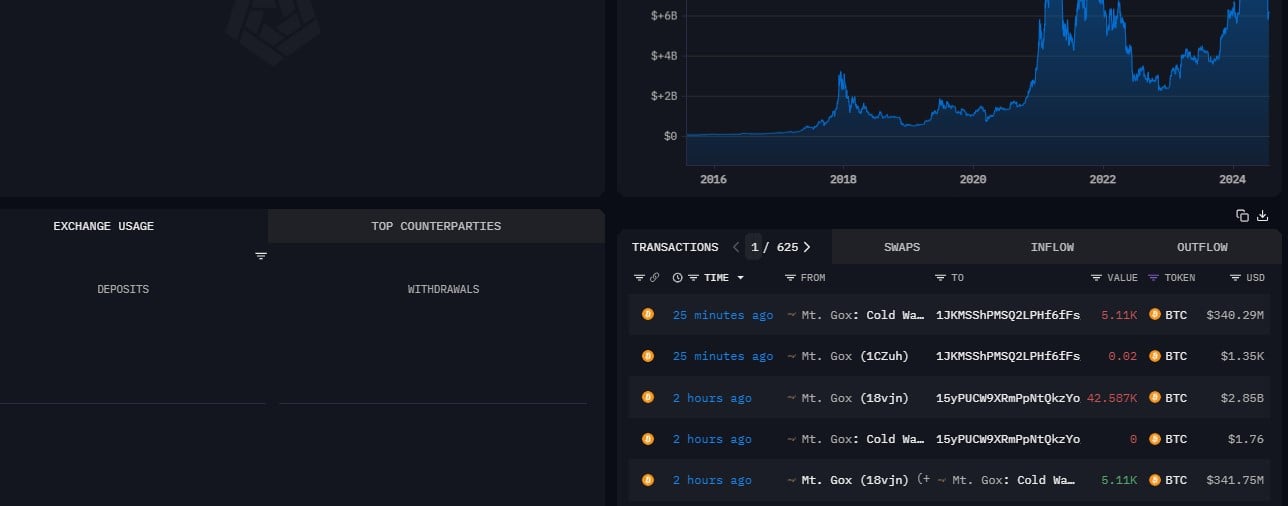 Mt. Gox’s recent wallet activities – Source: Arkham Intelligence
These transactions could be part of an ongoing process to repay $9 billion in Bitcoin to creditors, which was confirmed earlier this month. Mt. Gox’s latest wallet activities follow a number of small Bitcoin transfers made yesterday, including one linked to Bitstamp . Those were believed to be test transactions before major distributions.
Bitstamp is one of the designated exchanges to handle Mt. Gox’s repayments. Other exchanges like Kraken have also received their shares , with Bitbank and SBI VC Trade reportedly distributing the funds to creditors shortly after receipt.
At the time of reporting, Mt. Gox’s Bitcoin holdings are valued at over $6 billion.
The recent transfer led to a sudden drop in Bitcoin’s price, which fell below $66,500 after hitting a high of $68,200 earlier today, CoinGecko’s data shows.
Disclaimer: The content of this article solely reflects the author's opinion and does not represent the platform in any capacity. This article is not intended to serve as a reference for making investment decisions.
You may also like
Bitcoin-Nasdaq ratio falls 62%, matching prior cycle lows as ETFs rebound
Sberbank to accept BTC, ETH, USDT as loan collateral under Russia’s new crypto rules
Ripple donates $300,000 to support Nepal, Tibet flood disaster relief
Krugman: What Walsh "didn't say" is more important than what he "said"
"We have a normal Federal Reserve Chair." Krugman believes that Waller did not signal a rate cut, did not mention balance sheet reduction, and abandoned alternative inflation metrics, demonstrating a traditionally hawkish stance unresponsive to political pressure. The biggest contradiction lies in the fact that while Waller emphasizes short-term interest rates as the core tool and opposes unconventional policies, at the same time, the Treasury's Besant is advancing a long-term bond purchase plan, which in essence is quantitative easing.
Crypto prices
More


