Powell-in sərt çıxışı faiz endirimi gözləntilərinə ağır zərbə vurdu, qlobal bazarlar “yeni fırtına” ilə üz-üzə!

 Pauell həmin gün Dallas FED-in təşkil etdiyi yerli biznes liderləri ilə keçirilən dialoqda bildirib: “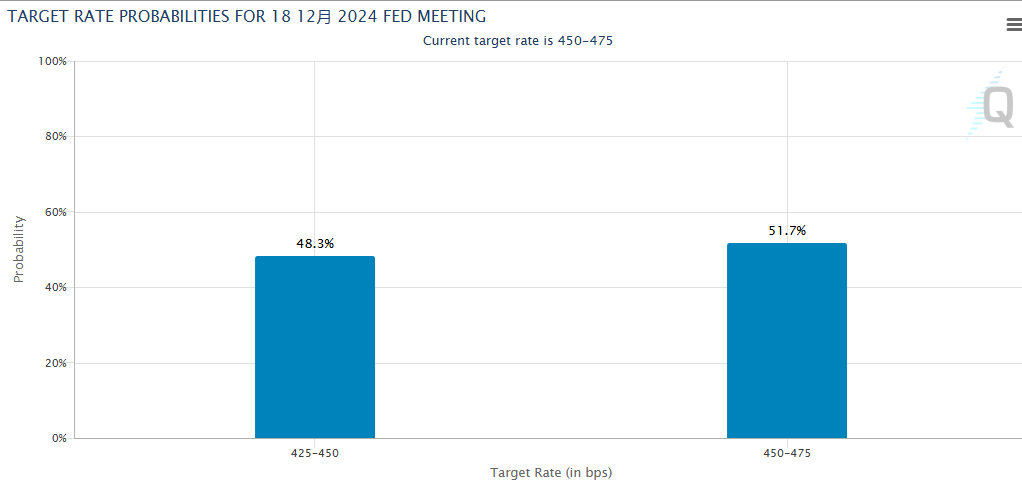
① Powell stated in his latest speech that the Federal Reserve is not in a hurry to cut interest rates in a strong economy; ② This hawkish rhetoric quickly stirred up a storm in the global market.
On November 15th, Caixin Media (Editor Xiaoxiang) reported that following the speech by Federal Reserve Chairman Powell in the early hours of Friday Beijing time, Powell stated that the Federal Reserve is not in a hurry to cut interest rates in a strong economy. This hawkish rhetoric quickly stirred up a storm in the global market.
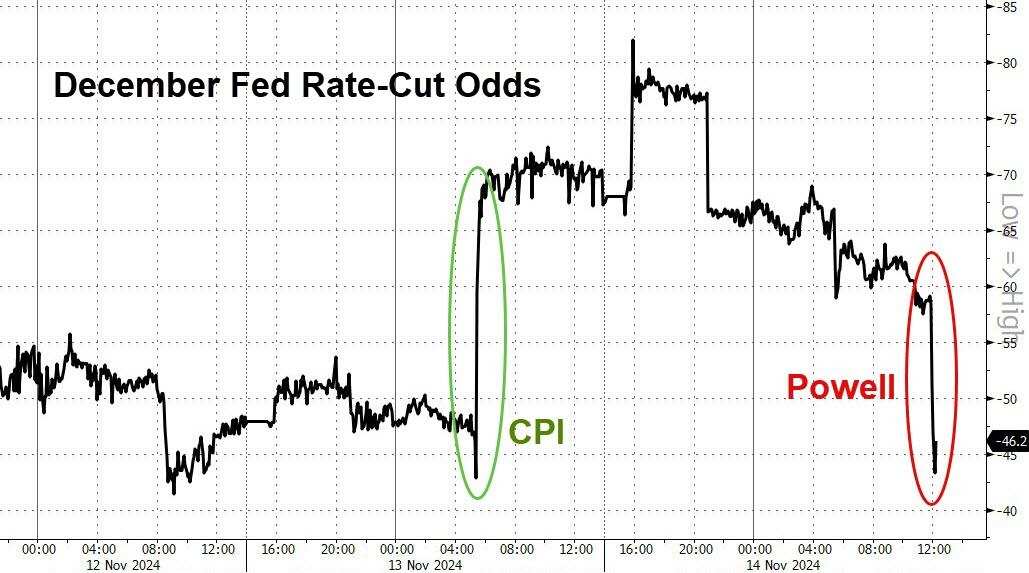
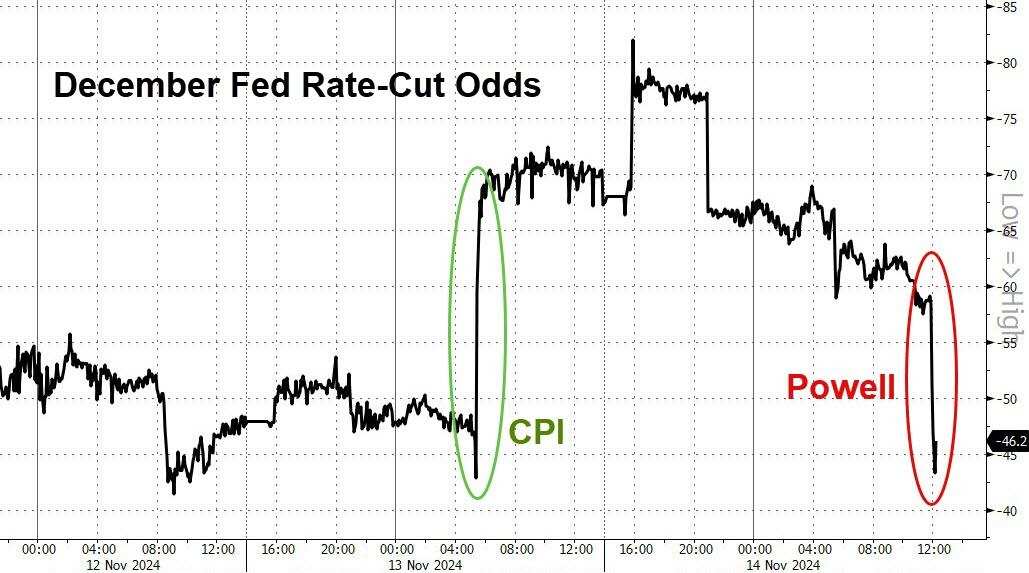
After Powell's speech, the US stock market closed near intraday lows, and the US dollar surged along with US bond yields, with the ICE US Dollar Index hitting a one-year high. Traders reduced the probability of a December rate cut from 80% the previous day to around 50%, sharply contrasting with the CPI release day before.
 During a dialogue with local business leaders hosted by the Dallas Fed, Powell said, "The economy has not shown any signals that require an urgent rate cut. A good economic situation gives us the ability to act prudently when making decisions."
Regarding inflation, Powell pointed out, "The inflation rate is getting closer to our long-term target of 2%, but has not yet been achieved. We are committed to this mission. With the labor market roughly balanced and inflation expectations well anchored, I expect the inflation rate to continue to trend towards the 2% target, albeit with some fluctuations."
To combat inflation, the Fed raised rates to the highest level in 20 years last year and then kept rates at that level for over a year to ensure that price pressures do not return. Since mid-2023, although US inflation has significantly decreased, the slowdown in price growth is sometimes uneven, including in the past two months.
Powell reiterated that the Fed's policy rate path will depend on upcoming data and the evolution of the economic outlook, closely monitoring core indicators of goods and services inflation, excluding housing, which have been declining over the past two years.
The Fed has cut rates in the last two meetings, first making a significant 50 basis point cut in September when there were signs that the labor market might be weakening. At the meeting last week, officials cut the benchmark rate again by 25 basis points to a range of 4.5% - 4.75%.
The next meeting of the Federal Reserve will be held on December 17-18. In his latest speech, Powell did not comment on the possibility of a rate cut at the December meeting. However, his remarks clearly dealt a significant blow to the market's expectations for a rate cut next month. The CME FedWatch Tool shows that the likelihood of the Fed achieving a third consecutive rate cut next month has once again become uncertain.
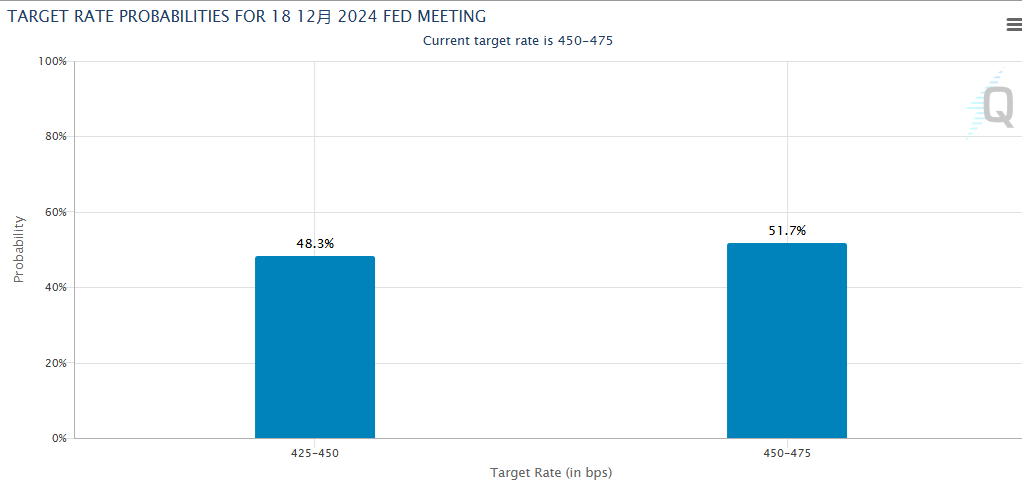
And market traders undoubtedly also quickly reacted to the news.
Global markets face a "new storm".
Most maturities of US Treasury yields rose after Powell's speech overnight, especially short-term yields surged, with the 2-year Treasury yield rebounding 8 basis points to 4.36% at one point.
Major US stock indexes also fell in response. The Dow fell by 0.5%. The S&P 500 index and the Nasdaq both fell by 0.6%, marking the largest single-day decline of the month.
In the forex market, the dollar further strengthened against major currencies on Thursday, with the ICE Dollar Index breaking above the 107 level, reaching a new high in a year, and rising for the fifth consecutive trading day.
Zachary Griffiths, director of credit investments and macro strategy at CreditSights in the US, said, "Powell's speech leans more towards hawkishness, with his future monetary policy bias towards risk management."
"Powell's speech is hawkish," Neil Dutta, Head of Economic Research at Renaissance Macro Research, also pointed out, "I believe they will still cut rates in December because the interest rate policy is still restrictive, and they aim to achieve the neutral rate setting. However, despite this, I think Powell (and the broader consensus) are complacent on the economic front. The downside risks in the short term are greater than people realize."
In fact, even aside from Powell's hawkish speech, a series of recent US economic data does not seem to support a rate cut much. As shown in the chart below, the number of initial jobless claims in the US has now dropped to a six-month low, and inflation data is generally stronger than expected. The economic and inflation situation still seems to face the risk of "not landing".
Market strategist at Murphy & Sylvest, senior wealth advisor Paul Nolte, said that based on the data of the past two days (consumer prices, producer prices, and weekly initial jobless claims), Powell would also find it difficult to become super dovish. All information indicates that job growth remains significant, and inflation continues to exceed the 2% target.
This also raises a question: if the scenario of "Trump comes to power, and Powell suspends rate cuts" really occurs (currently it seems very likely that the Fed will slow down its easing pace early next year), how angry would the "understanding king" who is always unhappy with Powell be?
Michael Feroli, Chief US Economist at JPMorgan, expects that Powell's speech may imply that the Fed will slow down its rate cuts before March next year. He wrote: "We still believe that the FOMC may cut rates in December. But today's speech has opened the door to slowing down the easing pace as early as January next year."
Editor / jayden
İmtina: Bu məqalənin məzmunu yalnız müəllifin fikrini əks etdirir və platformanı heç bir şəkildə təmsil etmir. Bu məqalə investisiya qərarları qəbul etmək üçün istinad kimi nəzərdə tutulmayıb.
Siz də bəyənə bilərsiniz
ABŞ çip səhmləri səkkiz gün ardıcıl ucuzlaşdı! 2 trilyon dollar bazar dəyəri buxar oldu, 2008-dən bəri ən uzun eniş tendensiyası yaşandı
Bu həftə süni intellekt investisiya gəlirləri perspektivləri bazar tərəfindən şübhə altına alındı, Philadelphia Semiconductor Index isə ardıcıl olaraq 11.4% eniş yaşadı və Nasdaq bir həftədə 4%-dən çox dəyər itirdi. CoreWeave səhmləri həftə ərzində 25%-dən çox ucuzlaşdı, istiqrazları isə çətin vəziyyətə düşdü və yüksək faizli borc maliyyələşdirmə modeli şübhə altına alındı. Strategilər həddindən artıq bədbinliyin fürsətin qaçırılması riski yaratdığını xəbərdarlıq etdi, "Wood sisə" isə bazar meylinə qarşı CoreWeave alımlarını artırdı.
Avqust ayında xarici kapital ABŞ borc bazarına qayıtdı, Britaniya ilk dəfə 1 trilyon dollarlıq səviyyəni keçdi, Yaponiya və Çin isə satmağa davam etdi; Çinin ABŞ borcları 2008-ci ildən bəri ən aşağı səviyyəyə düşdü.
ABŞ Maliyyə Nazirliyinin hesabatına görə, avqust ayında xarici investorlar ABŞ dövlət borc kağızlarını 108,9 milyard dollar xalis alıblar və iki aylıq azalmadan sonra borc portfeli artıb. Ən çox ABŞ dövlət borcu saxlayan on ölkə və region arasında yalnız Çin və Yaponiyanın portfelləri azalıb. Ən böyük "kreditor" olan Yaponiyanın portfeli, valyuta bazarına müdaxilə olunan ayda son 22 ayın minimumuna düşüb və ardıcıl dörd ay azalıb. Çin isə ardıcıl üç ay portfelini azaldıb və iki ay ərzində 2008-ci ildən bəri ən aşağı səviyyəyə çatıb. İkinci ən böyük "kreditor" olan Böyük Britaniya portfeli isə ardıcıl iki ayda tarixi maksimuma çatıb. Kanada avqustda 38,3 milyard dollar artımla lider olub və ümumi portfeli üzrə beşinci yerə yüksəlib. İkinci ən böyük artımı isə Belçika göstərərək portfelini 19,8 milyard dollar artırıb.

Xəbərə görə: Yaponiyanın SoftBank Qrupu ABŞ-ın ən böyük təhlükəsizlik şirkəti Allied-i almağı düşünür
SoftBank Qrupu hazırda ABŞ-ın ən böyük təhlükəsizlik şirkəti Allied Universal-un alınması ilə bağlı ilkin danışıqlar aparır. Potensial səhm dəyəri 18 milyard dollara, təxminən 12 milyard dollar borc ilə birlikdə, ümumi əməliyyat dəyəri 30 milyard dollara çata bilər. Masayoshi Son təhlükəsizlik sahəsini robot texnologiyalarının sınaq məkanı kimi əsas prioritet hesab edir ki, bu da onun süni intellekt və robot strategiyasına uyğun gəlir. Xəbər yayıldıqdan sonra SoftBank-ın ADR dəyəri bir gündə demək olar ki, 10% azalıb.
ABŞ-ın 2026-cı il büdcə kəsiri 1,99 trilyon dollar təşkil edəcək, 12% artacaq, faiz xərcləri rekord həddə çatıb
ABŞ-ın 2026-cı maliyyə ili üzrə xərcləri 6% artaraq 7.4 trilyon dollara çatacaq, gəlirləri isə 3% artaraq 5.4 trilyon dollar olacaq, büdcə kəsiri artmağa davam edir. Xalis faiz xərcləri 81.4 milyard dollar artaraq 1.05 trilyon dollara çatıb və tarixi maksimuma çatıb. Trampın vergi azaldılması qanunu nəticəsində müəssisələrin gəlir vergisindən əldə olunan gəlirlər 70 milyard dollardan çox azalıb. Besent gömrük rüsumlarının geri qaytarılmasını büdcə kəsirinin artmasının əsas səbəblərindən biri kimi göstərir. BVF, Avropa Mərkəzi Bankı və CBO "artımla büdcə kəsirinin azaldılması" məntiqini eyni anda sual altına alıblar.