FED Decision Meets PCE and GDP: Five Major Central Banks Take the Stage This Week—Is the Market Ready for Volatility?
This week (October 27–30), global financial markets will face a dense lineup of major macroeconomic events. In addition to the U.S. Federal Reserve’s interest rate decision, the European Central Bank (ECB), Bank of Japan (BOJ), Reserve Bank of New Zealand (RBNZ), and Bank of Canada (BoC) will also announce their policy decisions. Meanwhile, the U.S. Core PCE Price Index and third-quarter GDP data will be released, placing inflation and growth firmly in the market spotlight.
For CFD traders, this is not merely a week to monitor whether interest rates change. It is also a key window in which volatility could rise simultaneously across the U.S. dollar, U.S. equity indices, gold, crude oil, major currency pairs, and crypto assets.
Fed Rate Decision: Market Focus Shifts to the “Future Path”
According to the Federal Reserve’s official calendar, the Federal Open Market Committee (FOMC) will meet from October 27 to 28, U.S. Eastern Time. The rate decision is scheduled for release at 2:00 a.m. Taiwan time on October 29, followed by the Fed Chair’s press conference at 2:30 a.m.
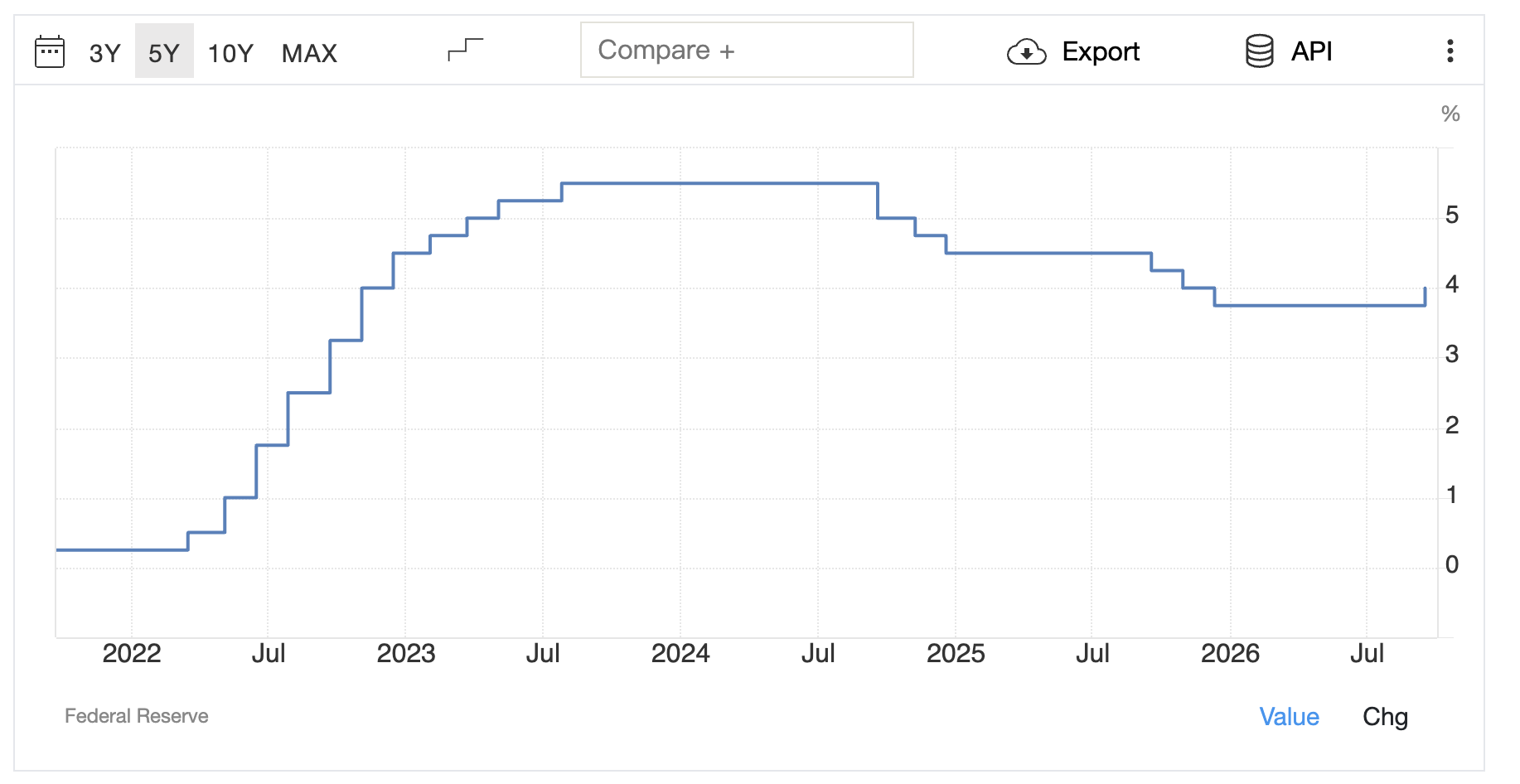
The Fed raised rates by 25 basis points in September, lifting the target range for the federal funds rate to 3.75%–4.00%. Markets broadly expect the Fed to keep rates unchanged at this meeting. As a result, the key market drivers are likely to be the policy statement, signals regarding the future rate path, and the Chair’s latest assessment of inflation and economic growth.
In other words, the market is not simply asking whether the Fed will raise rates this time. It is focused on whether:
-
The Fed believes inflation remains sticky;
-
It signals that further tightening may still be necessary;
-
It adjusts its assessment of employment, consumer spending, and economic growth;
-
It expresses concerns over financial conditions, U.S. dollar movements, or market liquidity.
If the Fed delivers a hawkish message, the U.S. dollar and Treasury yields could still rise even if rates remain unchanged, potentially putting pressure on gold, U.S. equities, Bitcoin, and other risk assets. Conversely, if the Chair’s remarks lean toward cooling inflation and slowing economic momentum, markets may reprice the possibility of a future policy pivot, potentially supporting a rebound in risk assets.
PCE and GDP Take Center Stage: Inflation and Growth Narratives Intersect
Following the FOMC meeting, markets will also face the release of U.S. Core PCE and third-quarter GDP data. Core PCE is a closely watched inflation gauge for the Fed, meaning the outcome could directly influence market pricing for future interest rate policy.
This week’s market narrative can be framed around two central questions:
Is inflation still above the Fed’s acceptable range?
If Core PCE comes in above market expectations, it would suggest that price pressures may not yet be fully under control. This could increase the likelihood of the Fed keeping rates elevated for longer—or even tightening policy further. Such a scenario is typically supportive of the U.S. dollar, but may weigh on gold, U.S. equities, and crypto assets.
Does the U.S. economy remain resilient?
If GDP exceeds expectations, markets may interpret it as a sign that the U.S. economy remains capable of absorbing high interest rates. In that case, the Fed may not be in a hurry to shift toward easing. However, if GDP slows materially while PCE also declines, expectations for future rate cuts or a policy pivot could strengthen.
It is also worth noting that when “high inflation” and “low growth” occur at the same time, market volatility tends to increase. Such a combination would place the Fed in a difficult position between containing inflation and preventing an economic slowdown from becoming more severe.
Five Central Banks in Action: FX Markets Could Become the Volatility Hub
Beyond the Fed, policy stances from the ECB, BOJ, RBNZ, and BoC will also shape movements in major currency pairs.
European Central Bank: Focus on the Euro and European Growth
Markets will watch how the ECB assesses eurozone inflation, growth, and the path of future interest rates. A hawkish ECB could provide support for the euro. However, if the central bank places greater emphasis on weak economic conditions, volatility in EUR/USD could intensify.
Bank of Japan: The Yen Remains Sensitive to Policy Normalization Expectations
Any changes in the BOJ’s language regarding inflation, wage growth, and monetary policy normalization will be a key driver for USD/JPY. If the BOJ turns more hawkish, the yen could strengthen rapidly. Conversely, if it maintains an accommodative stance, pressure on the yen may persist.
Canada and New Zealand: More Opportunities in Commodity Currencies
Policy decisions from Canada and New Zealand will affect the Canadian dollar (CAD) and New Zealand dollar (NZD), respectively. Beyond the rate decisions themselves, traders should also monitor external factors such as crude oil prices, risk sentiment, and expectations for Chinese demand, as these may affect short-term performance in commodity currencies.
Three Scenarios for CFD Traders to Watch
Scenario 1: Hawkish Fed, Stronger-than-Expected PCE
If the Fed stresses that its inflation fight is not over and Core PCE exceeds expectations, markets may see:
-
A stronger U.S. dollar;
-
Rising U.S. Treasury yields;
-
Pressure on gold;
-
Increased volatility in U.S. equity indices;
-
Short-term pressure on Bitcoin and other high-risk assets.
Traders may monitor price reactions in the U.S. Dollar Index, EUR/USD, GBP/USD, XAU/USD, NASDAQ 100, and BTC.
Scenario 2: Neutral-to-Dovish Fed and Cooling Inflation
If the Fed adopts a more moderate tone on inflation and PCE data declines, markets may renew bets on a future policy pivot. Potential implications include:
-
A weaker U.S. dollar;
-
A rebound in gold;
-
Strength in U.S. equities and technology stocks;
-
Improved sentiment toward Bitcoin and other risk assets;
-
Support for non-U.S. currencies.
Scenario 3: Clear GDP Weakness with Sticky Inflation
This is a combination the market is less likely to welcome. Slowing growth without meaningful inflation relief could raise stagflation concerns, potentially triggering broader volatility across equities, commodities, currencies, and bonds. In this environment, traders should pay close attention to leverage exposure and risk management.
Event-Trading Reminder: Watch the “Expectation Gap,” Not Just the Data
When major data is released, market reactions do not depend solely on whether the figures are positive or negative. They also depend on the gap between actual results and market expectations, as well as whether the Fed Chair’s comments alter investors’ views on the future rate path.
Key trading principles to consider include:
-
Avoid excessive leverage ahead of major data releases;
-
Be aware of wider spreads and short-term slippage risk;
-
Set clear stop-loss levels and position limits;
-
Watch not only the initial market reaction, but also the second wave of moves following the press conference and market interpretation;
-
Cross-check the U.S. dollar, Treasury yields, gold, and U.S. equity indices to assess the direction of market risk appetite.
With the Fed leading a week of decisions from five major central banks, alongside key PCE and GDP releases, financial markets may enter a period of elevated volatility. For CFD traders, volatility can create trading opportunities—but risk management should always take priority over directional conviction.
Looking to capture market opportunities driven by the Fed decision, PCE, GDP, and global central bank policies? Use Bitget CFD to monitor real-time movements in forex, gold, indices, energy, and crypto assets, and flexibly position for both long and short opportunities.
All trading education provided by Bitget is for educational purposes only and should not be considered financial advice. The strategies and examples shared are for reference only and may not reflect actual market conditions. CFD trading involves significant risk, including the potential loss of capital. Past performance does not guarantee future results. Please conduct thorough research and ensure that you understand the risks involved. Bitget is not responsible for any trading decisions made by users.


- Fed Rate Decision: Market Focus Shifts to the “Future Path”
- PCE and GDP Take Center Stage: Inflation and Growth Narratives Intersect
- Five Central Banks in Action: FX Markets Could Become the Volatility Hub
- Three Scenarios for CFD Traders to Watch
- Event-Trading Reminder: Watch the “Expectation Gap,” Not Just the Data