
Bitget Compute Perpetuals Explained
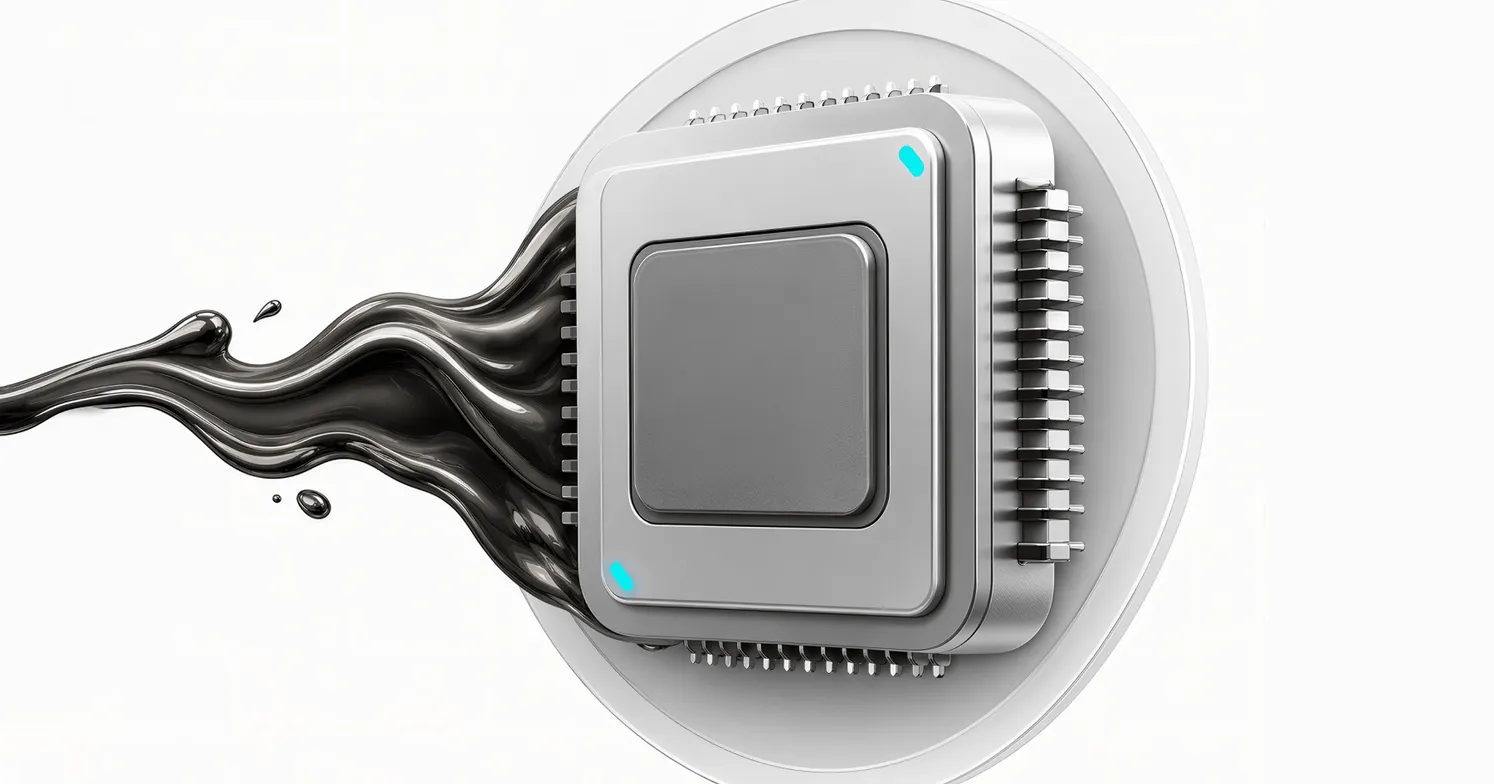
Computing power is becoming the new oil of the AI era. In the industrial age, those who controlled oil controlled the pulse of economic growth. Now in the AI era, what truly powers everything is compute. Behind every intelligence use case, such as large language model training, real-time inference, and generative applications, hundreds or even thousands of high-end GPUs are running non-stop. As demand for computing power surges and prices become more volatile, a new financial instrument has emerged: compute perpetuals.
It is quietly transforming AI's most essential factor of production into an asset that can be traded, hedged, and allocated around.
What are compute perpetuals?
Simply put, compute perpetuals are derivatives based on GPU rental prices. They do not involve delivery of physical hardware. Instead, standardized indices enable the market to price and trade expectations of whether compute will become more expensive.
Crude oil futures facilitate price discovery for global oil supply and demand. Similarly, compute perpetuals enable the market to price the real cost of AI infrastructure.
When training a large model can consume tens or even hundreds of millions of dollars in compute resources, price fluctuations are no longer merely a technical detail, but representing tangible business risks and investment opportunities. Compute is the new oil of the AI era. Compute perpetuals are a critical step in turning this new oil into a tradable asset.
Bitget is the first to bring the new oil to retail traders
On September 8, 2026, Bitget officially launched the industry's first pre-market perpetual futures for retail users based on computing power: H100USDT and B200USDT.
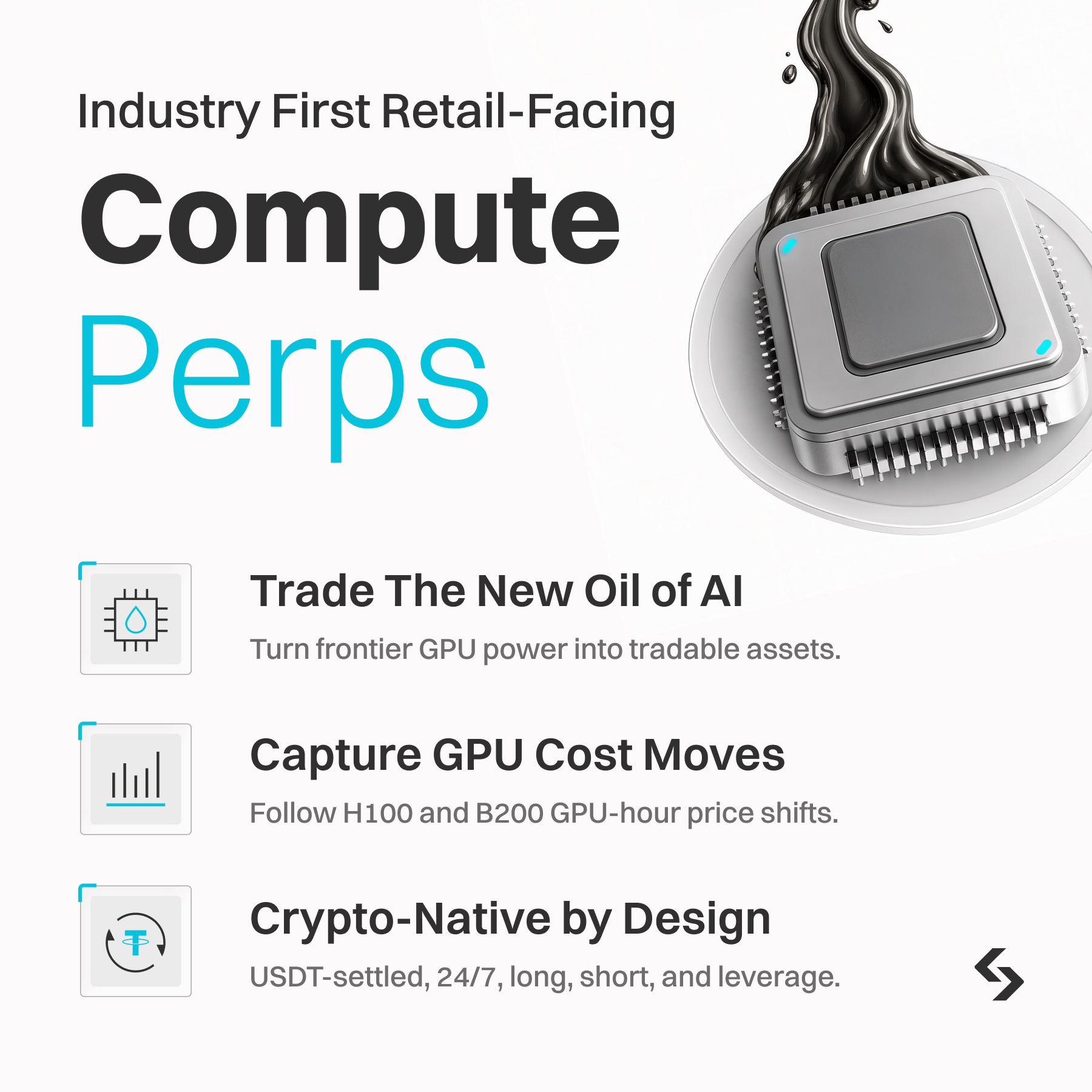
The two futures products are respectively linked to GPU rental price indices for NVIDIA H100 and the next-generation Blackwell B200 GPUs, quoted in USD per GPU hour. They allow users to go long or short on global AI compute rental prices without purchasing GPUs or renting servers. The futures offer up to 10x leverage, USDT settlement, and 24/7 trading.
Pricing dynamics of compute resources that were only open to cloud providers, supercomputing centers, and large AI companies are now available for retail traders as well. This is more than simply the launch of another futures product. It marks the first meaningful financialization of a core production resource of the AI era.
What do the H100 and B200 indices track?
The two indices are published by a professional data provider, Silicon Data, and are widely recognized benchmarks for GPU rental prices:
-
H100 Index: Reflects the standard hourly rental cost of the H100, a leading GPU used for training and inference.
-
B200 Index: Reflects the standard hourly rental cost of NVIDIA's latest-generation Blackwell B200 GPU.
The data is sourced from actual quotes provided by multiple cloud service and compute suppliers. It is standardized to account for factors such as specifications, rental terms, and regions. The indices aim to reflect real market supply-demand dynamics, rather than the internal pricing of any single platform.
Trading these futures is essentially trading the question: How expensive is global high-end compute?
What does cash settlement mean?
Unlike many traditional commodity futures, compute perpetuals use cash settlement only.At settlement or when a position is closed, no one will deliver a pile of GPUs to your home, nor will you be asked to take over a server in a data center. The system settles profits and losses in USDT based on the difference between the futures price and the index price. This means:
Lower entry barriers, simpler operations, better liquidity, and more suitable for the crypto-native 24/7 trading environment. What you are actually trading is a view on the prices, not a physical asset.
How are compute futures different from crypto futures?
| Aspect |
Crude oil futures |
Crypto perpetuals |
Compute perpetuals (H100 and B200) |
| Underlying asset |
Energy of the industrial age |
Digital asset prices |
Core factor of production in the AI era |
| Price drivers |
Supply and demand, geopolitics, inventory |
Sentiment, capital, macro conditions |
AI demand, chip supply, electricity costs |
| Settlement method |
Physical or cash |
Cash settlement |
Cash settlement only (in USDT) |
| Trading hours |
Fixed trading hours |
24/7 |
24/7 |
| Accessibility |
Relatively high entry barrier |
Retail-friendly |
Retail-friendly, with up to 10x leverage |
| Historical significance |
Lifeblood of industry |
Volatility instrument |
New oil of the AI era |
Compute perpetuals combine the infrastructure nature of crude-oil futures with the flexibility and efficiency of crypto perps. In a nutshell, they give retail traders their first opportunity to directly participate in pricing the fundamental cost of AI.
What are you actually trading through compute perpetuals?
You are trading:
-
Expectations for changes in global high-end GPU rental prices
-
Changes in AI compute supply-demand dynamics
-
Cash-settled profits and losses in USDT
-
Your view on how expensive computing power will become
You are not trading:
-
Real H100 or B200 GPUs
-
Data center racks or electricity
-
Any physical asset requiring maintenance or delivery
-
Delivery obligations associated with traditional futures
You are trading views, not machines.
FAQ
Q: Why should retail traders care about compute perpetuals?
This is because AI has been integrated into nearly every industry. Rising compute costs may ultimately be reflected in AI service pricing, tech company margins, and even assets associated with AI. Trading compute prices directly offers more targeted exposure than indirectly trading AI-related narratives.
Q: How are compute perpetuals different from buying NVIDIA stock shares?
Stocks are influenced by valuation, earnings, market sentiment, and other factors. Compute perpetuals focus on tracking supply and demand for GPU rental capacity. The two may be related, but they do not necessarily move in perfect sync.
Q: Are compute perpetuals risky?
Leverage involves risk. Traders should manage responsible position sizes and treat compute perpetuals as a tool for expressing market views, but not as a form of speculation.
Q: Will there be more related products in the future?
Very likely. As the AI compute market matures, more GPU models and longer futures terms may become available. This is only the beginning.
Conclusion
From oil to computing power, humanity has consistently turned its most essential factors of production into tradable assets. As the new oil of the AI era emerges, those who participate early in its price discovery may also be among the first to identify new trends.
Bitget's H100 and B200 compute perpetual futures represent a milestone where this opportunity is made available to retail traders for the first time.


- What are compute perpetuals?
- Bitget is the first to bring the new oil to retail traders
- What do the H100 and B200 indices track?
- What does cash settlement mean?
- How are compute futures different from crypto futures?
- What are you actually trading through compute perpetuals?
- FAQ
- Conclusion
 Micron Reclaims $1,000: Is a Second Leg Higher Beginning?2026-09-08 | 5m
 rToken: 5 ETFs Covering Core U.S. Markets2026-09-08 | 5m
 Top Small-Cap Stocks to Watch2026-09-08 | 5m