U.S. Inflation and the Fed’s Rate-Hike Path: How a Potential October Pause and December Hike Could Affect Financial Markets
Markets are reassessing the endpoint of the Federal Reserve’s current tightening cycle. According to a recent Reuters survey, while most economists expect the Fed to pause rate hikes at its October meeting, all respondents expect another increase in December. Compared with the divided views on year-end rate hikes seen last month, this suggests that hawkish expectations for the interest-rate path are gaining momentum rapidly.
For financial markets, a “pause this month, followed by renewed tightening at year-end” does not mean that risks have faded. Instead, it suggests that interest rates, the U.S. dollar, U.S. Treasury yields, gold, and equities may continue to be affected by repeated revisions in policy expectations. For CFD traders, the key is not only the rate decision itself, but also the signals the Fed sends regarding inflation, economic growth, and the future direction of monetary policy.
An October Pause Is the Main Expectation, but a December Hike Has Clear Consensus
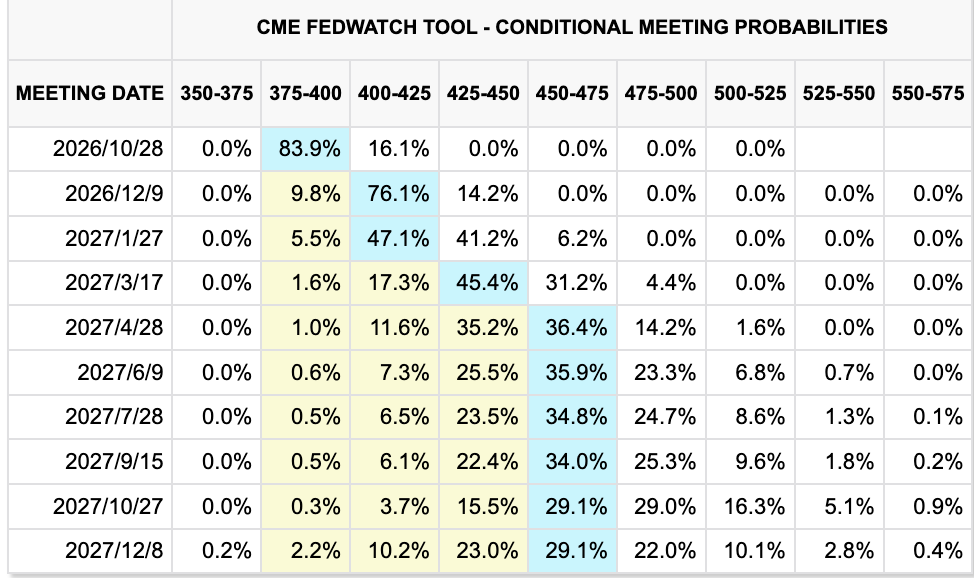
The survey showed that 94 out of 100 economists expect the Fed to leave interest rates unchanged at its October 27–28 meeting, with the federal funds rate likely remaining in the 3.75%–4.00% range. This forecast is broadly in line with market pricing.
However, market attention has gradually shifted from whether the Fed will raise rates in October to whether it will resume tightening in December. Every respondent in the survey expects one more rate hike before the end of the year, reflecting persistent concerns about elevated inflation and the resilience of the U.S. economy.
Although the Fed has recently adopted more cautious language, economic data have not yet created a clear case for easing. When economic growth remains expansionary and inflation stays above target, policymakers may be more inclined to wait and assess conditions rather than declare the tightening cycle officially over.
In other words, an October pause is more likely to represent an adjustment in policy pace than a fundamental shift in the Fed’s monetary-policy stance.
Bond Markets Are Pricing in Policy Expectations First as Yield Volatility Increases
Recent movements in the U.S. Treasury market reflect investors’ sensitivity to Fed policy signals.
As inflation concerns and expectations for near-term rate hikes increased, longer-dated Treasury yields rose. However, as markets reduced the probability of an immediate October hike, yields retreated sharply. The policy-sensitive 2-year Treasury yield also rose before falling back, indicating that markets are not simply trading economic data; they are continuously reassessing the Fed’s likely policy path.
In this environment, volatility may spread across multiple asset classes:
-
U.S. Dollar Index: If the Fed maintains a hawkish stance or signals a December rate hike, the U.S. dollar could find support.
-
Gold: Rising rate expectations generally increase the opportunity cost of holding non-yielding assets. However, safe-haven demand, geopolitical developments, and dollar movements may also affect gold prices.
-
U.S. Equity Indices: Technology stocks and high-valuation growth shares tend to be more sensitive to interest-rate movements. If yields rise again, indices such as the Nasdaq could come under pressure.
-
Crude Oil and Energy Commodities: Geopolitical conflict and energy supply risks may push oil prices higher, while also making the inflation outlook more complicated.
-
Treasury-Related Markets: Short-term moves in bond yields may become more pronounced around rate decisions and the release of CPI, PCE, and labor-market data.
Higher Terminal-Rate Expectations Raise the Risk of “Higher for Longer”
Among economists who answered questions about the terminal rate, nearly 60% expect the policy rate to peak between 4.00% and 4.25%. Another approximately 38% believe the Fed may still need to raise rates at least twice more.
This means that the market is not only facing the question of whether there will be one more hike. It is also confronting the possibility that the final policy rate could be higher than currently expected and that elevated rates could remain in place for longer.
Some economists argue that risks to U.S. economic growth and inflation remain tilted to the upside. If the labor market remains strong, consumer spending does not cool significantly, and energy prices and tariffs continue to lift costs, the Fed may find it difficult to pivot quickly toward rate cuts.
For traders, a high-rate environment generally has two key implications:
1. Asset valuations may be repriced
Higher financing costs can weigh on corporate valuations, particularly for technology and growth stocks with stronger expectations for future earnings.
2. Markets become more sensitive to economic data
Every inflation reading, retail-sales report, employment release, and GDP figure could reshape expectations for the next policy decision and trigger sharp short-term volatility.
Inflation May Take Longer to Return to the 2% Target
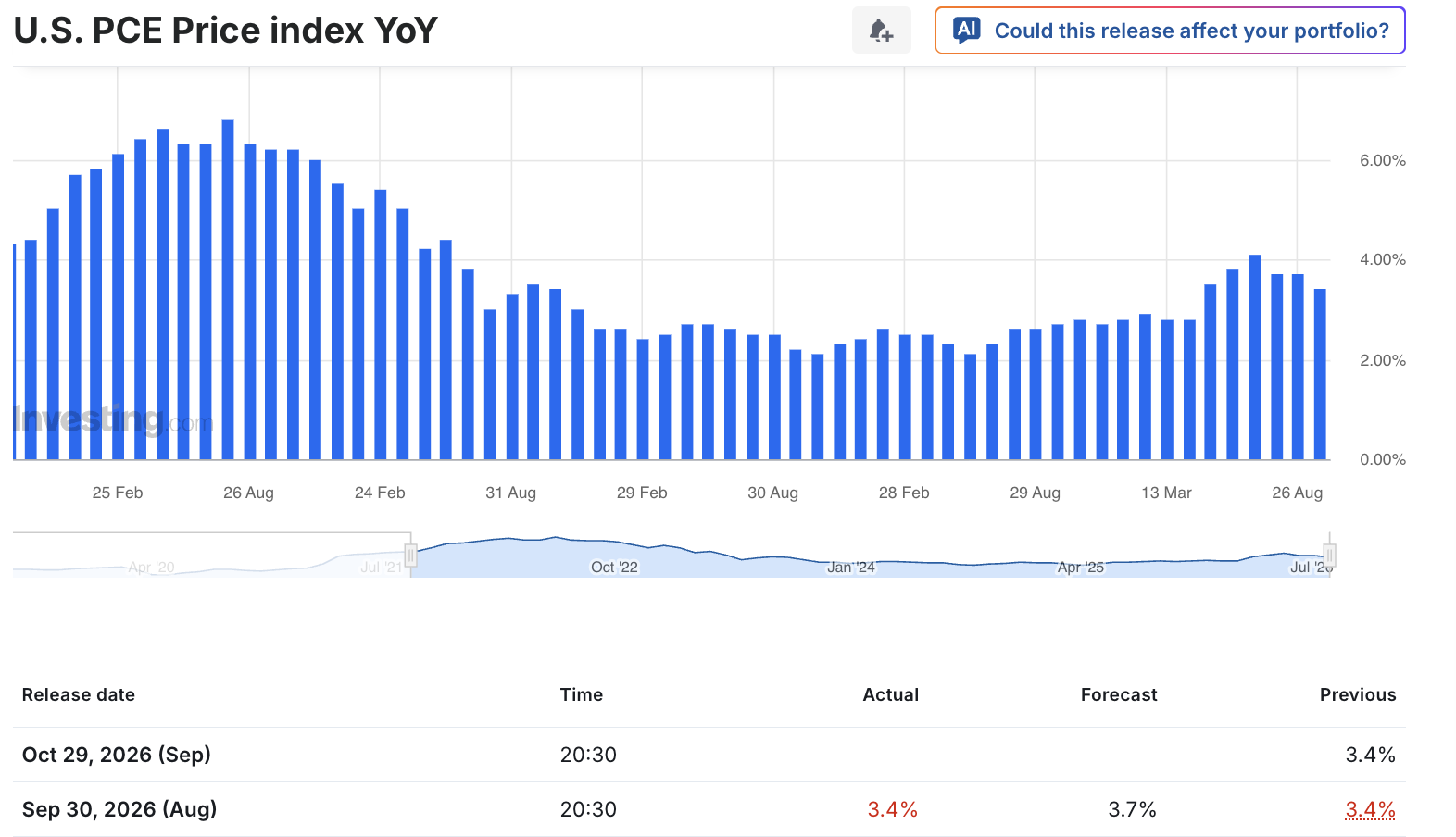
Survey forecasts indicate that the year-over-year growth rate of the Personal Consumption Expenditures (PCE) Price Index—the Fed’s preferred inflation gauge—may remain above 3% over the coming quarters, still some distance from the Fed’s 2% inflation target. Some projections suggest inflation may not return meaningfully close to target until 2028.
Inflationary pressure is not coming from a single source. Persistently high energy prices, tariffs that raise the cost of imported goods, and geopolitical events that could disrupt supply chains may all cause inflation to decline more slowly than markets initially expected.
When inflation proves sticky, even a temporary Fed pause does not necessarily mean that policy will shift quickly toward easing. This is the core reason markets have recently rebuilt consensus around another rate hike in December.
AI Investment Supports Economic Resilience but Makes Rapid Fed Easing More Difficult
Notably, the U.S. economy has not cooled as quickly as some market participants had expected. Investment in AI infrastructure, semiconductors, cloud computing, and technology capital expenditure is supporting corporate investment and overall economic growth.
Markets expect U.S. growth to remain relatively resilient, with annual growth exceeding the longer-term trend rate that the Fed considers less likely to fuel inflation. While economic resilience can reduce recession risks, it also means that demand may continue to place upward pressure on prices.
In addition, the wealth effect created by the AI boom may be concentrated among higher-income households with greater exposure to equities. This has created a divergence in consumer spending: some households remain able to spend, while others continue to face pressure from higher living costs and interest rates.
For the Fed, this combination of an economy that has not weakened and inflation that has not fallen will make policymaking more challenging.
Key Market Events for CFD Traders to Watch
In an environment of rising uncertainty around monetary policy, traders may want to monitor the following events:
-
Fed interest-rate decisions and post-meeting statements
-
Fed Chair press conferences and comments from Fed officials
-
U.S. CPI and PCE inflation data
-
Nonfarm payrolls, unemployment, and wage-growth data
-
U.S. GDP, retail sales, and consumer-confidence data
-
Movements in 2-year and 10-year U.S. Treasury yields
-
Trends in the U.S. Dollar Index, gold, crude oil, and major U.S. equity indices
For CFD traders, volatility itself can create trading opportunities, but it also increases risk. In particular, prices can move quickly during major data releases and Fed meetings. Spreads, slippage, and leverage risk should all be incorporated into a trading plan.
Conclusion: A Fed Pause Does Not Mean Markets Will Enter a Calm Period
The current market consensus is that the Fed may pause this month, but the probability of another rate hike before year-end is increasing. Above-target inflation, a resilient economy, and energy- and supply-side risks all make a “higher-for-longer” interest-rate environment a scenario that cannot be ignored.
Over the coming months, the U.S. dollar, Treasuries, gold, crude oil, and U.S. equity indices may all experience notable volatility as interest-rate expectations change. For traders, the key is not simply predicting whether the Fed will hike rates, but understanding how prices react when market expectations shift—and managing risk accordingly.
Looking to capture trading opportunities created by Fed policy, inflation data, and global market volatility? With Bitget CFD, you can follow market movements in U.S. equity indices, gold, crude oil, forex, and more, while responding flexibly to both bullish and bearish conditions.
All trading education provided by Bitget is for educational purposes only and should not be considered financial advice. The strategies and examples shared are for reference only and may not reflect actual market conditions. CFD trading involves significant risk, including the potential loss of capital. Past performance does not guarantee future results. Please conduct thorough research and ensure that you understand the risks involved. Bitget is not responsible for any trading decisions made by users.


- An October Pause Is the Main Expectation, but a December Hike Has Clear Consensus
- Bond Markets Are Pricing in Policy Expectations First as Yield Volatility Increases
- Higher Terminal-Rate Expectations Raise the Risk of “Higher for Longer”
- Inflation May Take Longer to Return to the 2% Target
- AI Investment Supports Economic Resilience but Makes Rapid Fed Easing More Difficult
- Key Market Events for CFD Traders to Watch
- Conclusion: A Fed Pause Does Not Mean Markets Will Enter a Calm Period